7 Steps: How to Study for Exams and Ace Finals
Key Takeaways
- Mastering how to study for exams requires replacing passive reading with active recall and scheduled review sessions.
- Scheduled, shorter study blocks drastically outperform last-minute cramming by working with your brain's natural memory consolidation processes.
- Simulating real test conditions through mock exams identifies specific knowledge gaps and reduces test-day anxiety.
- Using AI-powered tools like Penseum automates flashcard creation and provides live, personalized tutoring based on your exact course materials.
1. What Is the Best Way to Study for Exams?
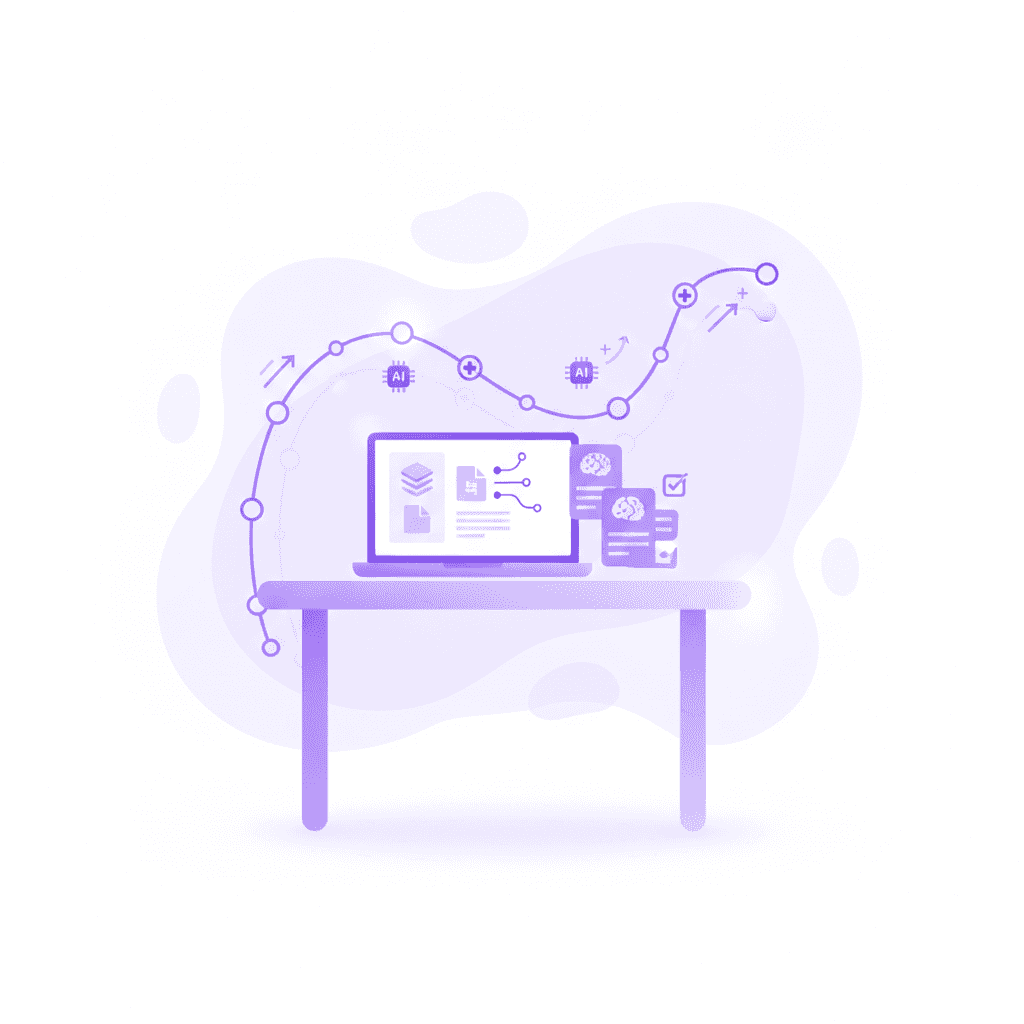
The best way to study for exams combines active recall and spaced repetition rather than passive reading. By actively retrieving information from your brain at spaced intervals, you strengthen neural pathways, significantly improving long-term memory retention and exam performance while reducing overall study time.
Many students fall into the trap of the "illusion of competence." This happens when you read a textbook chapter multiple times, highlight key phrases, and feel familiar with the material. Recognizing a concept on a page is entirely different from recalling it from memory under pressure. Passive reading fails to build the strong neural connections required for deep learning.
Testing yourself forces your brain to work harder. This cognitive effort is exactly what cements the information in your memory. Research consistently validates this approach. A comprehensive evaluation by Dunlosky et al. (2013) on effective learning techniques showed that practice testing yields a 25% higher retention rate compared to highlighting and rereading. The researchers ranked practice testing as having "high utility" for widespread application across all subjects and student age groups.
To implement this, you must change your daily academic habits. Instead of reading a lecture slide and nodding along, close the presentation. Ask yourself to summarize the slide's main points out loud. Identifying 8 Best Study Techniques For Higher Grades early in your semester sets the foundation for easier final weeks.
Actionable step: Ditch the highlighter and start testing yourself with practice questions immediately after reading a chapter.
2. How Do You Create an Effective Study Schedule?
Creating an effective study schedule requires breaking your syllabus into manageable chunks and assigning them to specific time blocks. Prioritize difficult subjects when your cognitive energy is highest, and incorporate frequent, short study sessions to prevent burnout rather than cramming the night before an exam.
Without a planned review schedule, your brain actively discards new information. This biological reality is known as the forgetting curve. Ebbinghaus' Forgetting Curve (1885) demonstrates that without scheduled reviews, students forget up to 79% of new information within 31 days. To combat this natural memory decay, your calendar must dictate when you learn new topics and exactly when you will review them.
Start by mapping out every topic you need to cover. Work backward from your exam date. Assign complex topics to the times of day you feel most alert. If you are a morning person, tackle organic chemistry at 8:00 AM, leaving lighter tasks like organizing notes for the late afternoon. This energy-matching strategy maximizes your limited study hours.
You should also explore 9 Effective Study Strategies to Boost Grades to refine how you allocate your time. Block scheduling works exceptionally well. Dedicate two hours to biology, take a long break, then dedicate two hours to literature. Mixing subjects, a technique known as interleaving, forces your brain to adapt and keeps you engaged.
Actionable step: Plan out your calendar two weeks before the exam, blocking out focused sessions followed by planned breaks to review core study strategies.
3. Why Is Active Recall and Spaced Repetition So Effective?
Active recall forces your brain to retrieve information, while spaced repetition spaces out these retrieval attempts over time. Together, they interrupt the forgetting curve, ensuring that knowledge is securely stored in your long-term memory for exam day instead of fading away after a few hours.
Every time you pull a fact from your memory, you tell your brain that this specific piece of data matters. Spaced repetition systems (SRS) optimize this process by asking you to recall information just as you are about to forget it. This timing is vital. If you review too soon, the exercise is too easy and yields little benefit. If you wait too long, you have to relearn the concept from scratch.
The data backing this dual approach is overwhelming. Karpicke & Roediger (2008) published research on retrieval practice, finding that students who used spaced repetition scored roughly 80% on exams compared to 36% for passive studiers. The students who continuously tested themselves vastly outperformed those who simply read the text.
You can easily adapt these methods to any subject. For vocabulary or formulas, physical or digital flashcards are ideal. For broader conceptual frameworks, try writing out everything you know on a blank sheet of paper, then checking your textbook to see what you missed. Applying 5 Spaced Repetition Tips for Better Grades early in your study cycle guarantees you will not be scrambling at the end of the term. Mastering 5 Active Recall and Spaced Repetition Tips for Exams transforms an overwhelming syllabus into achievable daily tasks.
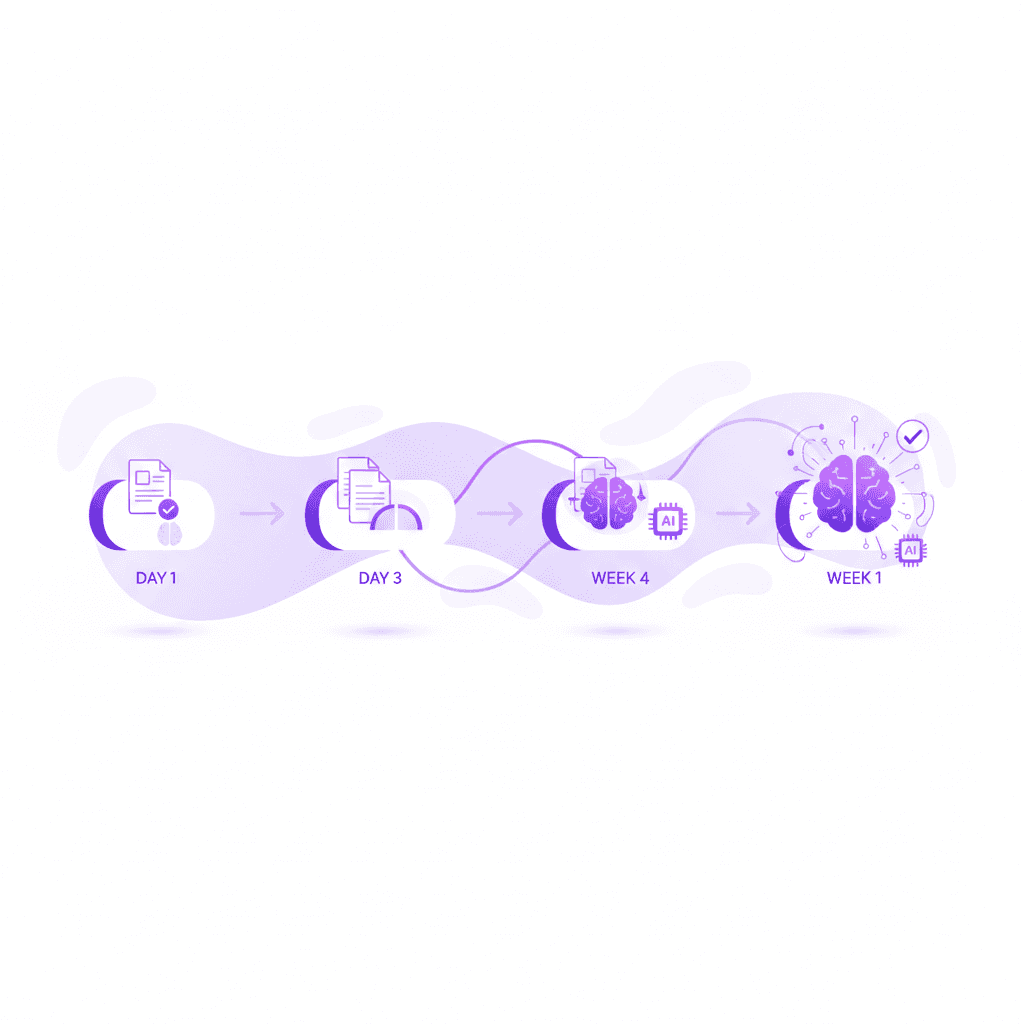
Actionable step: Create flashcards for key concepts and review them using a spaced schedule, such as one day, three days, and one week after initial learning.
4. How Can the Pomodoro Technique Help You Focus While Studying?
The Pomodoro Technique boosts focus by breaking work into intervals, traditionally 25 minutes in length, separated by short breaks. This method prevents cognitive fatigue and burnout, keeping your mind fresh and maintaining high levels of concentration during long and grueling exam preparation sessions.
Staring at a textbook for five straight hours rarely results in five hours of actual learning. Human attention spans naturally wane over prolonged periods. By instituting forced breaks, you give your working memory a chance to clear its cache.
Studies on sustained attention (Ariga & Lleras, 2011) show that brief mental breaks can improve focus on a single task by up to 30%. The researchers found that deactivating and reactivating your goals allows you to stay focused much longer than trying to maintain continuous attention without resting. The Pomodoro technique perfectly aligns with this psychological mechanism.
During your 25-minute sprint, commit entirely to the task. No checking emails, no responding to texts, and no browsing the internet. Learning 7 Ways: How to Focus While Studying to Ace Exams will help you eliminate these specific environmental distractions. Once the timer rings, step away from your desk completely. Stretch, grab water, or look out a window. This physical detachment resets your cognitive load.
Actionable step: Set a timer for 25 minutes of uninterrupted study, place your phone in another room, and take a 5-minute break when the timer rings.
5. What Are the Best Study Methods to Memorize Faster?
To memorize faster, employ mnemonic devices, mind maps, and the Feynman Technique, which involves explaining concepts in simple terms. Teaching the material to someone else forces you to understand the foundational logic rather than just memorizing disjointed facts, cementing the knowledge deeper into your brain.
Rote memorization—repeating a fact over and over—is highly inefficient. Your brain prefers to connect new information to existing knowledge structures. Mnemonic devices like acronyms or the method of loci (memory palaces) provide artificial hooks for your brain to grab onto.
The Feynman Technique stands out for complex subjects. Named after the Nobel Prize-winning physicist Richard Feynman, this method exposes gaps in your understanding instantly. If you cannot explain a concept using simple vocabulary, you do not truly understand it. Relying on complex jargon often masks a lack of foundational comprehension.
Cognitive load theory (Sweller, 1988) indicates that reducing extraneous load by simplifying concepts increases memory retention capacity by nearly 40%. By breaking down a heavy academic topic into easily digestible pieces, you free up working memory to process and store the core principles. Discovering 7 Tips on How to Memorize Faster for Exams can drastically cut down the hours you spend staring at your notes.
Actionable step: Explain a complex topic out loud to an imaginary audience, identifying and immediately reviewing the specific areas where you stumble or hesitate.
6. How Should You Practice with Mock Exams?
Practicing with past papers familiarizes you with the exam format, question styles, and strict time constraints. This simulated testing environment drastically reduces test anxiety and highlights specific knowledge gaps that require further targeted review before the actual test date arrives.
Studying isolated concepts is helpful, but exams test your ability to integrate those concepts under pressure. Mock exams bridge the gap between knowing the material and proving you know it. They teach you pacing. You might know how to solve a complex calculus equation, but if it takes you twenty minutes and the exam only allows ten, you have a problem.
The psychological benefits are equally profound. State-dependent memory suggests that we recall information better when we are in the same psychological or physical state as when we learned it. Simulating test conditions minimizes the shock of the actual exam room. The Roediger & Karpicke (2006) test-enhanced learning study shows mock tests improve final exam scores by up to 30% compared to studying notes alone.
After completing a practice paper, the review phase is critical. Do not just check your score and move on. Analyze every incorrect answer. Did you misread the question? Did you run out of time? Was there a fundamental gap in your knowledge? Reviewing 7 Steps on How to Study for Better Exam Grades helps structure this post-exam autopsy. Implementing 7 Ways: How To Study Effectively For Better Grades ensures your next practice test yields a higher score.
Actionable step: Take at least one full-length mock exam under realistic, timed conditions without looking at your notes to gauge true readiness.
7. How Penseum Helps You Apply Exam Study Techniques
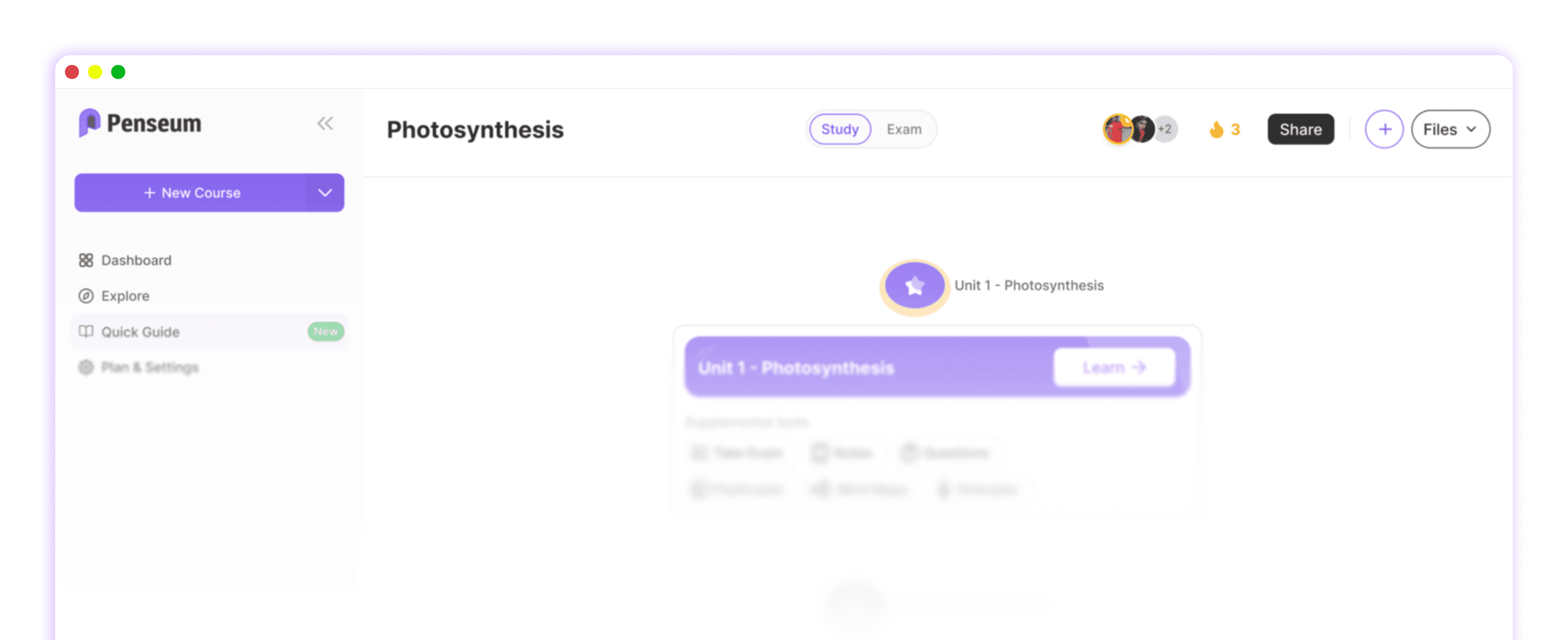
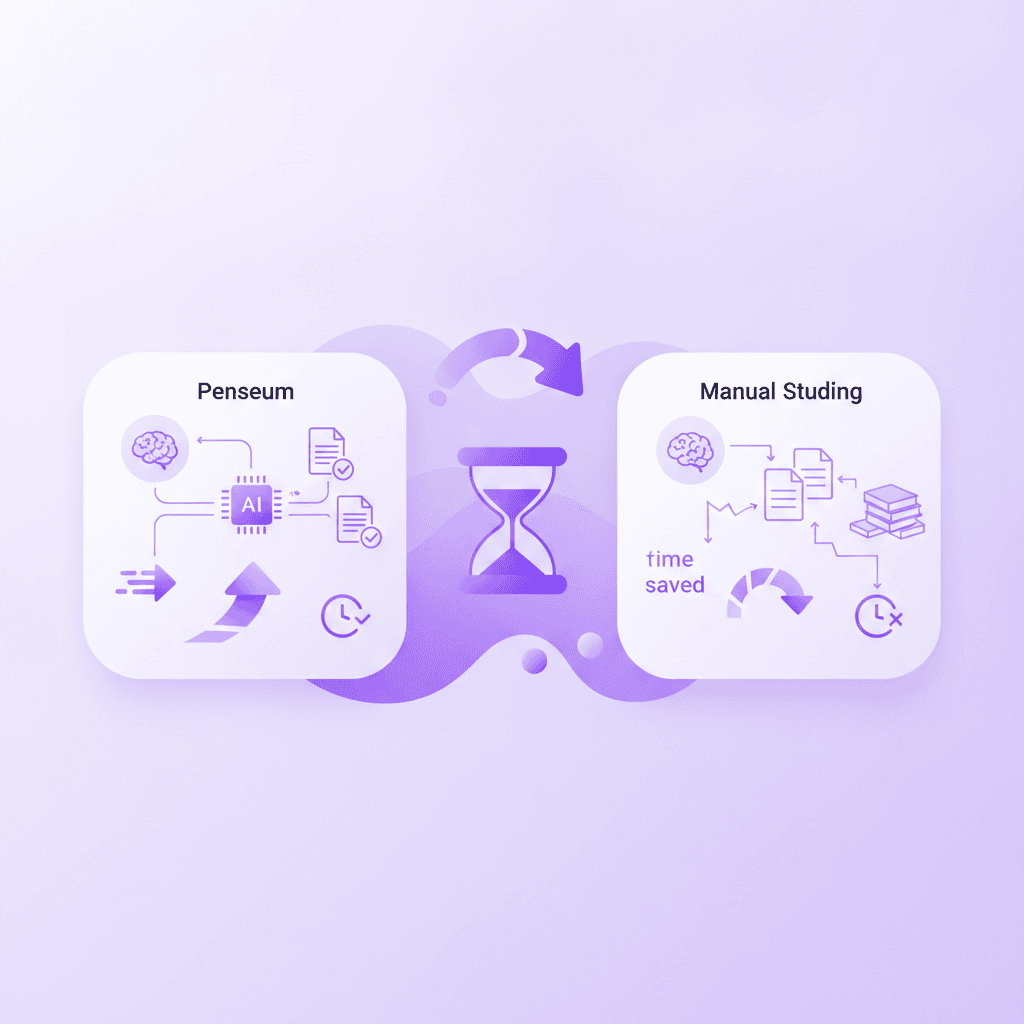
When figuring out how to study for finals, generating your own high-quality materials can take as much time as actually studying them. Penseum automates the creation of study materials directly from your uploaded notes, PDFs, or slides. Instead of relying on potentially inaccurate, crowdsourced decks like on Quizlet, Penseum builds resources exclusively from your specific coursework. It transforms your raw documents into flashcards, quizzes, study guides, and mind maps in seconds.
Beyond standard text generation, Penseum functions as a live 1-on-1 AI tutor. If you are struggling with a math problem or a complex chemistry equation, the AI doesn't just hand you the answer. It explains the problem in real-time voice, step by step, out loud. It sees your actual work on the screen, draws diagrams on your canvas, catches specific mistakes, and explains exactly what went wrong. The tutor waits for you to try again, keeping you engaged until you genuinely understand the concept.
This all-in-one platform integrates active recall, spaced repetition, and expert guidance without the need for multiple subscriptions.
Over 1.6 million students across 130+ countries and hundreds of universities actively use Penseum to accelerate their exam prep and improve academic performance. With options to interact via mobile devices and a dedicated workspace for each class, the platform adapts to your specific routine. Reading 7 Steps: How to Study for Finals & Ace Exams gives you a solid foundation, but applying those steps with purpose-built tools accelerates your progress.
Feature | Penseum 1-on-1 AI Tutor | Standard AI Chatbots | Traditional Manual Study |
|---|---|---|---|
Material Accuracy | 100% based on your uploaded syllabus | General internet knowledge, prone to errors | Accurate, but takes hours to compile |
Live Interaction | Voice explanations, draws diagrams live | Text only, generic responses | Requires booking a human tutor |
Mistake Correction | Sees your work, marks exact errors | Can only react to typed text | Finding mistakes on your own |
Active Recall | Auto-generates quizzes and flashcards | Must prompt repeatedly | Manual writing and cutting cards |
Pacing | Waits for you to try again, step-by-step | Gives the full answer immediately | Limited by your own motivation |
Actionable step: Create a free account on Penseum—no credit card required—and upload your hardest class syllabus today to instantly generate custom practice quizzes and let the AI tutor walk you through your first problem.
Frequently Asked Questions
How many hours should I study for an exam?
Most university guidelines recommend studying two to three hours per week for every credit hour a class is worth. For exam preparation, distribute this time over several weeks. Studying for 15 hours spaced across three weeks results in far better retention than studying 15 hours the weekend before the test.
Is it better to study at night or in the morning?
The best time to study depends entirely on your personal circadian rhythm. Morning studying benefits from a rested brain and fewer social distractions, making it ideal for complex problem-solving. Night studying can improve memory consolidation since sleep immediately follows learning, which helps lock in rote memorization and vocabulary.
How do you study for exams in one day?
If you only have one day, abandon reading your textbook and prioritize high-yield concepts. Use active recall by testing yourself on past exam papers or chapter summaries. Block your day into strict 25-minute focus sessions with 5-minute breaks to maintain stamina, and ensure you get at least seven hours of sleep before the test.
Why do I forget everything I study during a test?
Blanking during a test usually stems from high anxiety or an over-reliance on passive study methods. If you only read your notes, your brain never practiced retrieving the information under pressure. Simulating test environments with mock exams and practicing deep breathing exercises can significantly reduce test-day memory blocks.
Are flashcards effective for studying for college finals?
Yes, flashcards are highly effective for college finals when combined with spaced repetition algorithms. They are best used for memorizing definitions, formulas, language vocabulary, and specific dates. They are less effective for understanding broad, complex systems unless the questions are specifically designed to test conceptual application rather than simple facts.
What is the most effective way to retain information before an exam?
The most effective way to retain information is through self-testing and teaching the material to someone else. Forcing your brain to retrieve answers without looking at notes strengthens memory pathways. Combining this retrieval practice with a spaced review schedule guarantees the information moves from short-term into long-term memory.
[AUTHOR]
Last updated: August 2026
Sources
Dunlosky, J., Rawson, K. A., Marsh, E. J., Nathan, M. J., & Willingham, D. T. (2013). Improving Students' Learning With Effective Learning Techniques: Promising Directions From Cognitive and Educational Psychology. Psychological Science in the Public Interest, 14(1), 4-58. https://pubmed.ncbi.nlm.nih.gov/26173288/
Ebbinghaus, H. (1885). Memory: A Contribution to Experimental Psychology. Annals of Neurosciences, 20(4), 155–156. https://www.ncbi.nlm.nih.gov/pmc/articles/PMC4117135/
Karpicke, J. D., & Roediger, H. L. (2008). The critical importance of retrieval for learning. Science, 319(5865), 966-968. https://pubmed.ncbi.nlm.nih.gov/18276894/
Ariga, A., & Lleras, A. (2011). Brief and rare mental "breaks" keep you focused: deactivation and reactivation of task goals preempt vigilance decrements. Cognition, 118(3), 439-443. https://pubmed.ncbi.nlm.nih.gov/21211793/
Sweller, J. (1988). Cognitive Load During Problem Solving: Effects on Learning. Cognitive Science, 12(2), 257-285. https://scholar.google.com/scholar?hl=en&q=Cognitive+Load+During+Problem+Solving%3A+Effects+on+Learning
Roediger, H. L., & Karpicke, J. D. (2006). Test-Enhanced Learning: Taking Memory Tests Improves Long-Term Retention. Psychological Science, 17(3), 249-255. https://pubmed.ncbi.nlm.nih.gov/16507066/
Penseum Internal Data. (2024). Platform Usage Statistics and Live Tutor Features. https://www.penseum.com/
Related guides
Ready to study smarter?
Start turning your notes into guides, quizzes, and flashcards in seconds.