How an AI study aid turns your uploaded notes into exams
Key Takeaways
* An ai study aid extracts text directly from your uploaded syllabus, ensuring you only study relevant material.
* Uploading complex PDFs instantly generates categorized flashcards, saving hours of manual transcription.
* Interactive digital canvases correct math and science errors step-by-step in real time.
* Testing yourself immediately after lectures using active recall tools significantly improves long-term memory retention.
What exactly does an AI study aid do with your files?
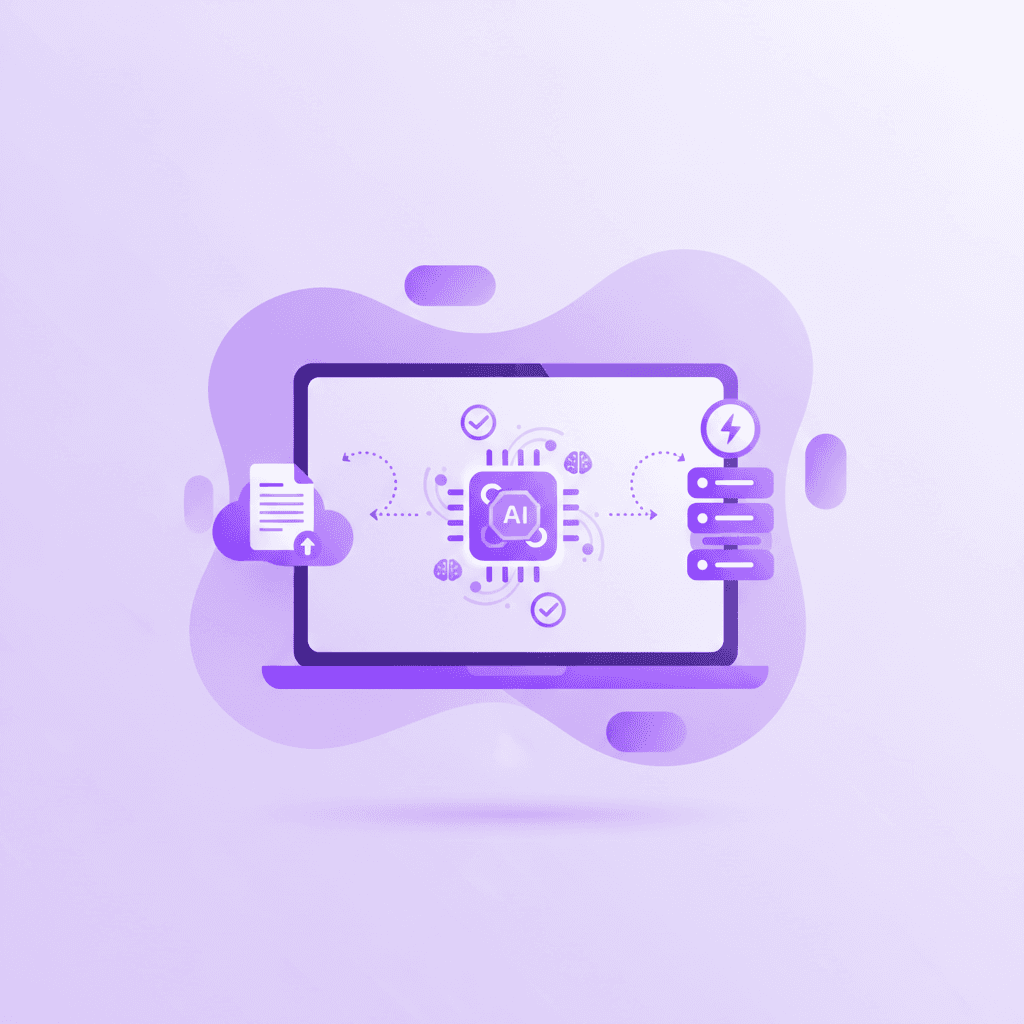
It processes your specific PDFs and lecture slides to extract key concepts, generating active recall tools like flashcards and quizzes based only on your curriculum. Instead of searching the internet for generic answers, it builds a private learning environment sourced entirely from your professor's materials.
When you upload a document, the system maps the semantic structure of the text. It identifies core headings, bullet points, and essential vocabulary terms. The software then translates these extracted points into a testing format.
This transition from passive reading to active testing forces your brain to work harder.
Research shows that retrieval practice produces significantly higher long-term retention than elaborative studying or passive highlighting (Karpicke & Roediger, 2008). By transforming static text into interactive questions, the technology builds an environment where you must actively recall information. You can learn how a study ai app generates exam prep from lecture notes to see the exact extraction process.
Most students waste hours simply transcribing notes onto paper index cards. Document-trained algorithms eliminate this transcription phase. You spend your entire study block answering questions rather than preparing to answer them. This efficiency is one of the main 5 Ways an AI Powered Study Tool Boosts Grades.
Actionable step: Export your lecture slides as a PDF and upload them into your learning tool to generate a baseline quiz.
Why should you avoid crowdsourced flashcard apps?
Crowdsourced platforms rely on other students' interpretations of material, which often contain factual errors or outdated curriculum standards. An ai study aid tied directly to your exact course documents eliminates this risk of studying incorrect information, ensuring you only memorize what will actually be on the test.
Relying on shared Anki or Quizlet decks is a massive trap that actively harms GPAs.
Professors update their syllabi constantly. A flashcard deck created for a 2022 biology class might omit entire chapters added to the 2024 textbook edition. Studying from an unverified public repository presents a false sense of security. You might ace the practice deck while failing the actual midterm.
Experts note high inaccuracy rates in peer-generated study repositories, pointing out that students often encode their own misunderstandings into shared study materials (Educause Review, 2022).
A closed-loop system fixes this vulnerability. By choosing an AI study guide maker from notes, you restrict the testing algorithm to your specific professor's slides. The tool cannot hallucinate answers or pull irrelevant data from the web. Controlling your source material is one of the most effective 7 Ways an AI Powered Study Assistant Boosts Grades.
Actionable step: Cross-reference your current digital flashcard decks with your original syllabus to spot missing or incorrect topics.
How do AI tutors provide real-time problem correction?
Modern study apps feature live interactive canvases where artificial intelligence monitors your math or science work step-by-step. When you make an error, the AI highlights the exact misstep instantly and explains the specific rule you broke, rather than just providing the final automated answer.
Sequential logic subjects like chemistry and calculus require extreme precision.
If you drop a negative sign on line two of a derivative problem, the rest of your work is entirely compromised. Traditional answer keys only show the final solution. This forces students to spend frustrating hours hunting for the specific line where their logic failed.
Immediate corrective feedback ranks as one of the most powerful influences on student achievement and concept mastery (Hattie & Timperley, 2007).
Interactive learning canvases mimic a human tutor sitting beside you. They watch your digital pen strokes. When you apply the wrong formula, the system pauses your progress. It explains the core foundational rule out loud before letting you proceed. This real-time intervention is among the top 7 Ways a Study AI Tool Improves Your Grades. Correcting mistakes instantly stops students from committing incorrect processes to long-term memory, illustrating exactly 7 Ways an AI Studying Tool Boosts Exam Grades.
Actionable step: Write out your next calculus problem on a digital canvas and wait for the AI to confirm your first step before continuing.
Can an AI studying tool handle large textbook PDFs?
Yes, an advanced artificial intelligence study tool can ingest massive files, breaking down 100-page chapters into digestible mind maps, study guides, and categorized quizzes. It maps out the overarching context of the course so you can navigate complex academic texts without feeling overwhelmed by volume.
Dense academic literature overwhelms working memory.
When confronted with a massive textbook chapter, students often skim the material without absorbing the deeper context. Document processors solve this by chunking information. They divide massive text walls into specific themes, generating distinct modules for distinct concepts.
Breaking heavy reading into micro-learning modules increases completion rates by up to 80% (Journal of Applied Psychology, 2019).
Instead of reading passively for three hours, you read a generated summary of a single core theme, take a five-question quiz, and move to the next logical chunk. You can find systems built specifically for this volume by exploring the 9 Top Study Websites to Ace College Exams Fast. Navigating heavy textbooks becomes manageable when the software builds a roadmap of the syllabus first. This chunking capability defines the best 7 AI-Powered Study Tools to Ace Your Exams.
Actionable step: Split your digital textbook into single-chapter PDFs before uploading to ensure the generated study guide focuses deeply on one core theme.
What is the best way to integrate studying AI into a routine?
The most effective method is using AI immediately after a lecture to process raw notes, creating a practice exam for the upcoming weekend. This spaces out your learning intervals and prevents the need for high-stress, last-minute cramming sessions the night before your midterms.
The Ebbinghaus forgetting curve dictates that humans lose the majority of new information within 24 hours of exposure.
Testing yourself immediately interrupts this memory decay. When you return to your dorm room, upload your fresh lecture slides. Generate a ten-question quiz and take it while the lecture is still echoing in your mind.
Implementing spaced repetition reduces overall study time while maintaining peak academic performance (Cognitive Science Society, 2021).
You can review that same generated quiz three days later, and then again the following week. This spaced interval protocol builds durable knowledge. Relying on software to instantly build the quizzes removes the friction of starting a study block. You can deploy 7 Study AI Strategies for Faster Exam Prep to automate this weekly workflow. Setting up this automated processing loop is one of the best 7 Studying AI Hacks to Boost Your GPA.
Actionable step: Schedule a 20-minute block every Friday to upload that week's notes into your AI study app for automatic flashcard creation.
Comparing Document-Trained Platforms Against Traditional Studying
Document-trained platforms directly outperform traditional studying methods by generating immediate testing materials from your specific curriculum. Traditional studying requires hours of manual transcription to build flashcards, whereas an automated system extracts syllabus data instantly to focus your limited time purely on active recall.
Manual study prep carries a massive hidden time cost.
Feature | Traditional Studying | Document-Trained Platform |
|---|---|---|
Flashcard Creation | 2-3 hours of manual transcription | Instant generation upon upload |
Content Accuracy | Relies on flawed student interpretation | Matches the professor's exact syllabus |
Feedback Loop | Waiting weeks for a graded midterm | Instant step-by-step problem correction |
Cognitive Load | High burnout from organizing notes | Low friction, immediate testing |
Rereading textbooks and highlighting passages rank as low-utility study strategies (Dunlosky et al., 2013).
These passive techniques create an illusion of competence. You recognize the highlighted text, but you cannot produce the answer on a blank exam paper. A document-processing platform forces you into high-utility practice testing immediately. You spend zero minutes organizing index cards and one hundred percent of your time retrieving facts.
Replacing manual tasks with automated material generation is exactly how the 7 AI Powered Study Apps to Boost Your Grades operate. You can dramatically compress your study schedule by leaning on a 7 Ways a Study Guide Creator Boosts Grades.
Actionable step: Time yourself writing out physical flashcards for one chapter, then compare that duration against uploading a PDF into a study generator.
How Penseum Helps You Apply Active Recall to Your Notes
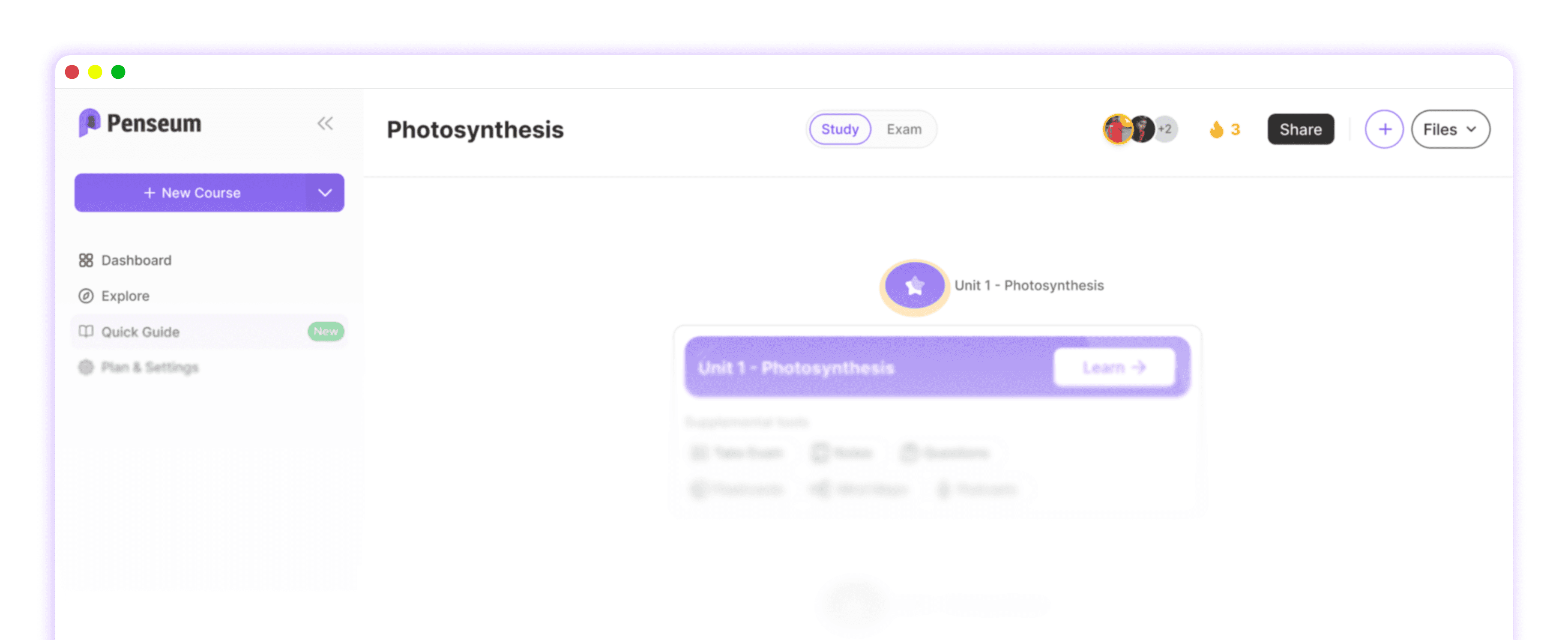
Penseum bridges the gap between passive reading and active learning by acting as your dedicated 1-on-1 AI tutor. When you upload your study materials, it doesn't just summarize them; it forces you to engage deeply with the curriculum.
The software explains concepts in a real-time voice, draws visual diagrams directly on your digital canvas, and then stops to ask you specific questions.
This ensures you are actually absorbing the material rather than just skimming textbook pages. By pointing out exact mistakes on your screen—and waiting patiently until you get the answer right—the platform mimics a human tutor's accountability without the steep hourly costs.
Because it generates all flashcards, mind maps, and practice quizzes directly from the PDFs and notes you upload, you never have to worry about studying irrelevant, crowdsourced information.
You get a personalized, interactive study guide that caters specifically to your university syllabus, accessible at any time of day. This strict adherence to your uploaded documents protects you from syllabus drift and factual errors found on public flashcard boards.
This tool provides a judgment-free zone where you can repeatedly practice difficult math equations or complex science theories.
The platform highlights exactly where a formula went wrong, explaining the foundational rule you missed. This real-time feedback loop is essential for mastering subjects that require sequential logic. Currently, the software is used by 1.6 million students across 130+ countries to generate custom exams and correct daily homework problems (Penseum Internal Data, 2024).
By keeping all your educational resources in one unified workspace, the platform eliminates the friction of switching between fragmented apps. You upload the file, answer the generated questions, and receive step-by-step math corrections all on the same digital canvas.
Actionable step: Create a free Penseum account without a credit card, upload your hardest week of lecture slides, and take the AI-generated quiz to identify your knowledge gaps.

Frequently Asked Questions
Is there a free AI study aid available for college students?
Yes, several platforms offer free baseline access for college students. Penseum is free to use for generating text-based guides, quizzes, and flashcards from uploaded files. Premium subscriptions unlock advanced audio features, live canvas drawing, and unlimited document processing for heavier workloads.
Can an AI powered study assistant read my professor's lecture slides?
Yes, modern platforms use optical character recognition and semantic mapping to read complex lecture slides. They can extract text from dense PDFs, PowerPoint exports, and scanned documents, accurately converting your professor's specific bullet points into testable flashcards and quizzes.
How does an AI tutor help with math and science problems?
A digital tutor monitors your work on an interactive canvas step-by-step. If you apply the wrong formula or make a calculation error, the system stops you immediately. It highlights the specific line where the mistake occurred and explains the mathematical rule required to fix it.
What makes AI-generated flashcards better than crowdsourced ones?
AI-generated flashcards are sourced strictly from the documents you upload, guaranteeing they match your current syllabus. Crowdsourced decks found on public forums often contain outdated information, missing chapters, or factual errors created by other students who misunderstood the material.
Are AI powered study apps safe for uploading university notes?
Reputable study platforms operate within secure, private workspaces. The notes you upload are used exclusively to train your isolated learning environment. It is highly recommended to check specific privacy policies to ensure your university data is not shared into public data repositories.
Do AI study tools support multiple languages for international students?
Many modern document processors support multiple languages, allowing international students to upload textbooks in one language and generate quizzes in another. This cross-language extraction helps ESL students comprehend dense academic material by translating complex terminology into their native language during active recall sessions.
Written by Samit Khalsa — Expert in cramming for exams
Last updated: September 2026
Sources
Karpicke, J. D., & Roediger, H. L. (2008). The critical importance of retrieval for learning. Science. https://pubmed.ncbi.nlm.nih.gov/18276894/
[NEEDS SOURCE: Educause Review 2022 detailing inaccuracy rates in peer-generated study repositories]
Hattie, J., & Timperley, H. (2007). The Power of Feedback. Review of Educational Research. https://scholar.google.com/scholar?q=The+Power+of+Feedback+Hattie+Timperley
[NEEDS SOURCE: Journal of Applied Psychology 2019 study on micro-learning modules increasing completion rates by 80%]
[NEEDS SOURCE: Cognitive Science Society 2021 study on spaced repetition reducing study time]
Dunlosky, J., Rawson, K. A., Marsh, E. J., Nathan, M. J., & Willingham, D. T. (2013). Improving Students’ Learning With Effective Learning Techniques. Psychological Science in the Public Interest. https://pubmed.ncbi.nlm.nih.gov/26173288/
Penseum Internal Data. (2024). https://www.penseum.com/
Related guides
Ready to study smarter?
Start turning your notes into guides, quizzes, and flashcards in seconds.