7 Secrets to the Best Way to Study for Exams
Key Takeaways:
* The best way to study combines evidence-based cognitive strategies to move information from short-term to long-term memory.
* Passive reading wastes time and creates false confidence, while active recall forces your brain to build strong neural pathways.
* Applying spaced repetition consistently interrupts the forgetting curve.
* Time-blocking methods prevent mental fatigue during long sessions.
* Utilizing AI tutors provides instant feedback to correct mistakes before exam day.
What is the most effective study method for memory?
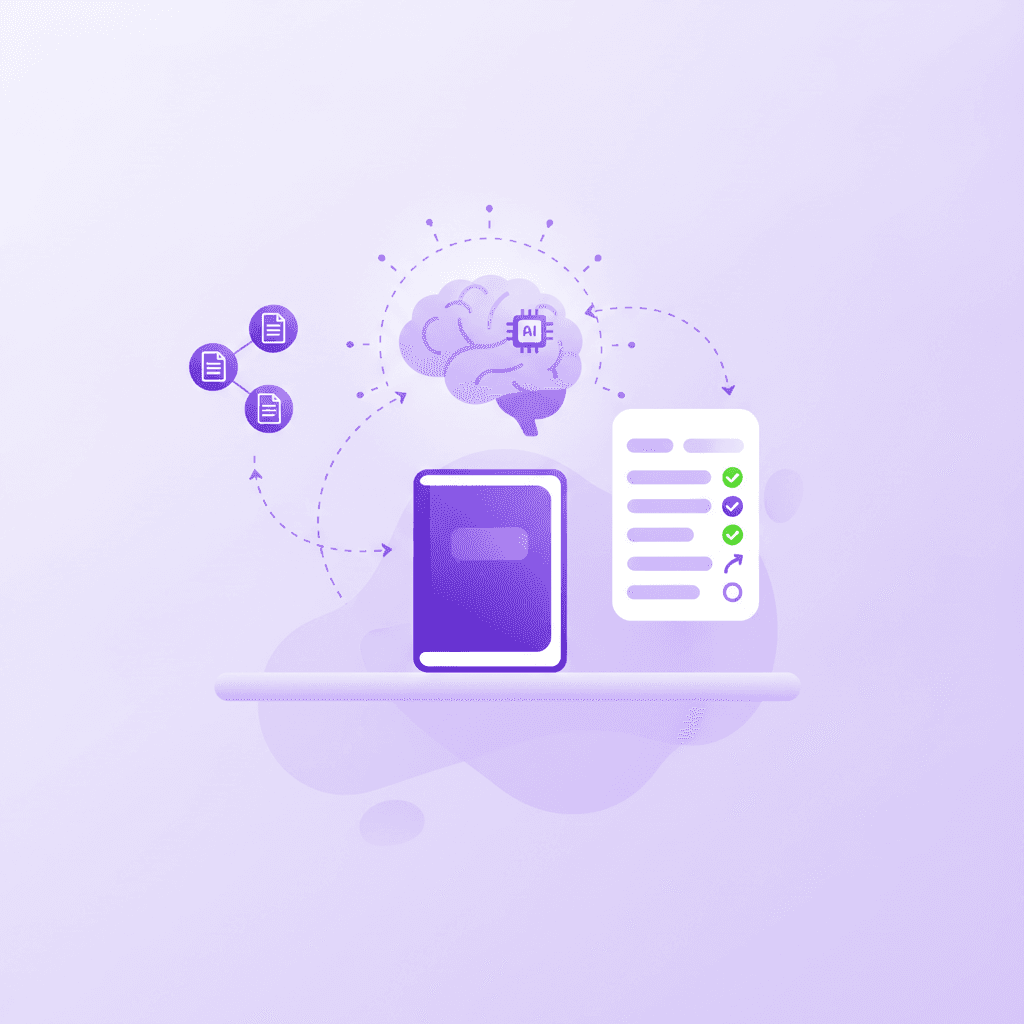
The most effective method is active recall, which involves actively stimulating your memory to retrieve a piece of information rather than passively re-reading textbooks. This forces your brain to work harder, creating stronger neural pathways that lock in information for exam day.
Establishing this habit fundamentally changes how your brain stores data. Karpicke & Roediger (2008) found that students who used active recall testing retained 80% more information than those who only used passive review. Reading a textbook feels productive because the text is right in front of you, creating an illusion of competence. You recognize the words, so your brain tricks you into thinking you have memorized the concept.
Consider a typical scenario: you are studying for a 50-question anatomy exam. If you passively re-read the textbook, your brain recognizes the term "mitochondria," tricking you into feeling prepared. However, recognizing a word on a page is entirely different from retrieving its function from memory during a timed test. Dunlosky et al. (2013) evaluated ten popular study techniques and concluded that practice testing provides the highest utility for long-term retention.
To apply active recall effectively and break this cycle of false confidence, follow these four precise steps:
1. Read a specific section of your textbook or lecture notes.
2. Close the book completely so you cannot see the material.
3. Write down everything you remember on a blank sheet of paper.
4. Open the book and highlight exactly what you missed, exposing exactly what you do not know.
Many students avoid this method because it feels difficult. The mental friction you experience during active recall is the exact mechanism causing the learning to happen. The harder your brain works to retrieve a fact, the more firmly that fact becomes embedded in your long-term memory. Comparing different methods reveals the 8 Best Study Techniques For Higher Grades, but active recall consistently ranks highest in clinical trials. Incorporating this approach shifts you away from recognition and moves you toward true retention. Mastering these habits aligns directly with the 7 Ways: How To Study Effectively For Better Grades.
How can I structure my study sessions to avoid burnout?
To prevent mental fatigue, structure your sessions using time-blocking methods like the Pomodoro technique. By breaking your study time into 25-minute intervals of intense focus followed by a 5-minute break, you maintain high cognitive function without exhausting your brain.
Continuous focus on a single task eventually leads to diminishing returns. A study by the University of Illinois (Ariga & Lleras, 2011) demonstrates that brief diversions and scheduled breaks vastly improve focus on tasks for prolonged periods. The brain habituates to constant stimulation. If you stare at a biology textbook for three hours straight, your cognitive control network begins to ignore the information.
Human brains operate best in sprints, not marathons. A study by the Draugiem Group analyzing computer habits found that their most productive employees worked intensely for exactly 52 minutes and then took a 17-minute break. Attempting to cram four chapters of history in a three-hour marathon often results in forgetting the latter half due to severe mental fatigue.
To implement a time-blocking system today, follow these actionable steps:
1. Choose a single, specific task (e.g., "Read chapter 4 of biology").
2. Set a timer for 25 minutes of uninterrupted focus.
3. Work until the timer rings, ignoring all outside stimuli.
4. Take a 5-minute break completely away from screens before starting the next block.
Do not use this 5-minute break to check social media. Stand up, stretch, or get a glass of water. If you want to implement this directly, follow these 5 Pomodoro Technique Steps to Study Faster.
Taking physical breaks clears the buildup of adenosine in the brain, which causes the feeling of mental exhaustion. When you return for your next 25-minute block, your focus resets. Protecting your attention span requires actionable strategies like the 7 Ways: How to Focus While Studying to Ace Exams. You will accomplish more in four focused Pomodoro blocks than you would during four hours of exhausted, unstructured reading.
When should I review my notes so I don't forget them?
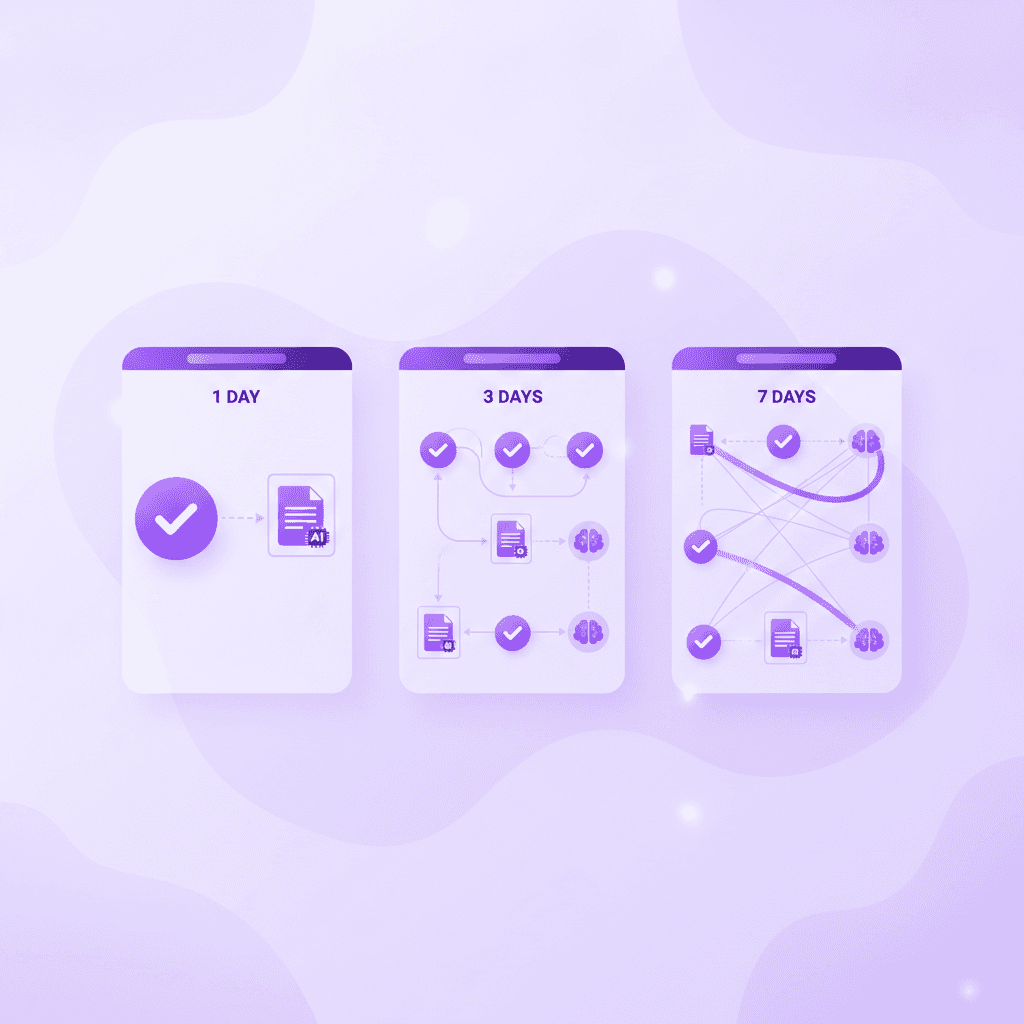
You should review your notes using spaced repetition, revisiting the material at increasing intervals over time. Reviewing concepts one day, three days, and a week after initially learning them interrupts the forgetting curve and shifts knowledge into long-term memory.
Your brain naturally discards information it does not use. Hermann Ebbinghaus's spacing effect research shows that spaced repetition can halt the forgetting curve, retaining up to 90% of information after a week. If you cram the night before a test, you might hold the data in your short-term memory just long enough to pass, but you will forget it within days.
Researchers at UC San Diego (Cepeda et al., 2008) determined that the optimal review gap is roughly 10% to 20% of the time you need to remember the information. If your exam is 100 days away, reviewing the material every 10 to 20 days maximizes long-term retention.
To fix the forgetting curve, you can map this out manually using a highly effective method like the Leitner System:
1. Create physical or digital flashcards for new concepts.
2. Place all cards in Box 1 and review them daily.
3. Move correctly answered cards to Box 2, which you review every three days.
4. Move any card you miss back to Box 1 for daily review.
This actionable step forces you to recall information just as you are about to forget it. Establishing a baseline requires reading our 5 Spaced Repetition Tips for Better Grades. Each successful retrieval extends the time before you need to review it again. Combining methods is often the answer, as seen in 5 Active Recall and Spaced Repetition Tips for Exams. By spacing out your sessions, you spend fewer total hours studying while retaining significantly more data.
What is the fastest way to understand complex topics?
The fastest way to grasp difficult subjects is the Feynman Technique, which involves teaching the concept to someone else in the simplest terms possible. Stripping away jargon exposes exactly where your understanding is weak, allowing you to target those specific gaps.
Students often hide behind complex vocabulary. If you can only explain cellular respiration using textbook definitions, you have not actually understood the process. Fiorella & Mayer (2013) discovered that students who studied with the expectation of teaching the material performed significantly better on comprehension tests. Teaching forces you to organize the information logically.
Take the concept of Einstein’s Theory of Relativity. If you explain it by saying "time dilation occurs due to velocity," you are relying on memorized jargon. Using the Feynman Technique, you would instead say, "Time moves slower for a person traveling in a fast spaceship compared to a person standing on Earth." This simple translation confirms you actually grasp the underlying physics.
To apply the Feynman Technique, use this specific sequence:
1. Write the concept name at the top of a blank page.
2. Write an explanation of the concept using simple, everyday language.
3. Identify exactly where your explanation breaks down or relies on textbook terms.
4. Review your source material, re-learn that specific gap, and simplify the explanation again.
Explain the concept out loud to a friend or an interactive AI tutor as if they are a beginner. If you stumble, stop and fix the knowledge gap. Understanding cognitive load is central to the 9 Effective Study Strategies to Boost Grades.
This method prevents you from memorizing meaningless phrases. It demands structural understanding. Encoding information heavily relates to 7 Tips on How to Memorize Faster for Exams. When you break down a macroeconomics theory so a middle schooler could understand it, you solidify the underlying logic in your own mind. This clarity forms the best way to study for essay-based exams or complex mathematical proofs.
How do I study for finals without losing focus?
Eliminating environmental distractions and single-tasking is vital for maintaining focus during finals. Multitasking dilutes your attention, making study sessions longer and less effective. Creating a dedicated, technology-free environment ensures your brain commits full resources to learning complex subjects.
Every time you look at a notification, you incur a cognitive penalty called attention residue. A portion of your brain remains stuck on the previous task. The University of California, Irvine (Mark, 2008) revealed that it takes an average of 23 minutes to fully regain focus after a single interruption. Checking your phone for thirty seconds can cost you nearly half an hour of deep focus.
A 2017 study by the University of Texas (Ward et al.) demonstrated that the mere physical presence of a smartphone on your desk significantly reduces available cognitive capacity, even if the device is turned off. The brain constantly uses energy to subconsciously resist the urge to check the phone.
To protect your cognitive resources during finals week, establish this routine before starting any study session:
1. Turn your smartphone on airplane mode.
2. Place the device in a completely different room or at the bottom of a zipped bag.
3. Install and activate a website blocker on your laptop.
4. Begin your study block only after the environment is secure.
Building a strong foundation begins with these 7 Steps on How to Study for Better Exam Grades. If you are studying for organic chemistry, you cannot simultaneously watch television or participate in a group chat. The brain physically cannot process complex encoding while dividing its resources. Structuring your week is outlined in 7 Steps: How to Study for Exams and Ace Finals. You must defend your study time aggressively. Finals week demands a specific approach detailed in 7 Steps: How to Study for Finals & Ace Exams. By treating your study session like a high-stakes exam environment, you train your brain to execute under pressure.
How can practice tests simulate actual exam conditions?
Taking full-length practice tests under timed conditions prepares your brain for the physical and mental demands of the actual exam. Simulating the testing environment reduces test anxiety and builds endurance for long, grueling testing periods.
While active recall helps you memorize individual facts, practice tests teach you how to apply those facts to complex scenarios. A study by Roediger and Karpicke (2006) demonstrated that taking a memory test not only assesses what one knows, but also enhances later retention—a phenomenon known as the testing effect. Students who took practice tests outperformed those who merely restudied by a significant margin.
Consider a scenario where your final exam is scheduled for 8:00 AM on a Tuesday in a large, quiet lecture hall. To maximize state-dependent memory, you should schedule a practice test for 8:00 AM in a silent library. Practicing in the exact physical and mental state as the real exam trains your brain to retrieve information under identical testing conditions.
To properly simulate an exam, follow these strict guidelines:
1. Print a full-length past exam paper or generate one using your study notes.
2. Clear your desk of all unauthorized materials, including phones and textbooks.
3. Set a rigid timer that perfectly matches the time limit of the real exam.
4. Grade the exam ruthlessly after finishing, identifying weak patterns to target in your next study session.
How Penseum Helps You Apply the Best Way to Study
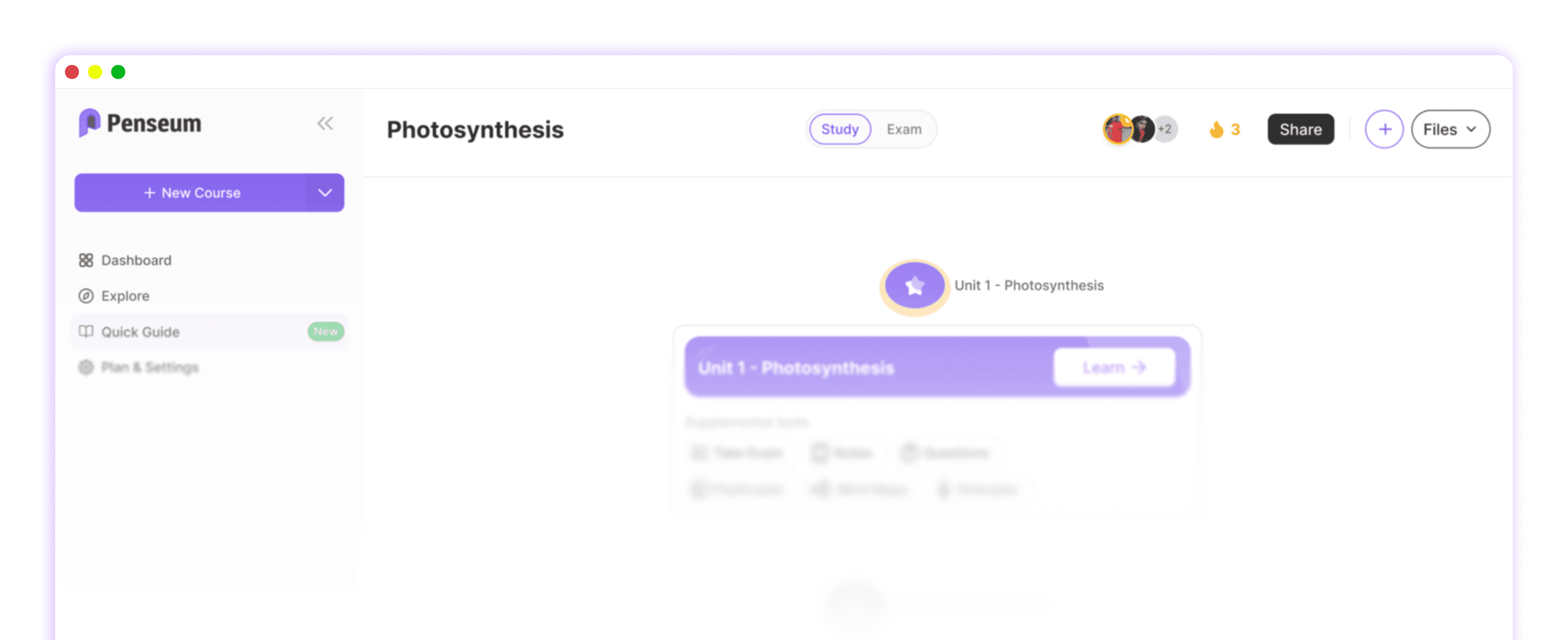
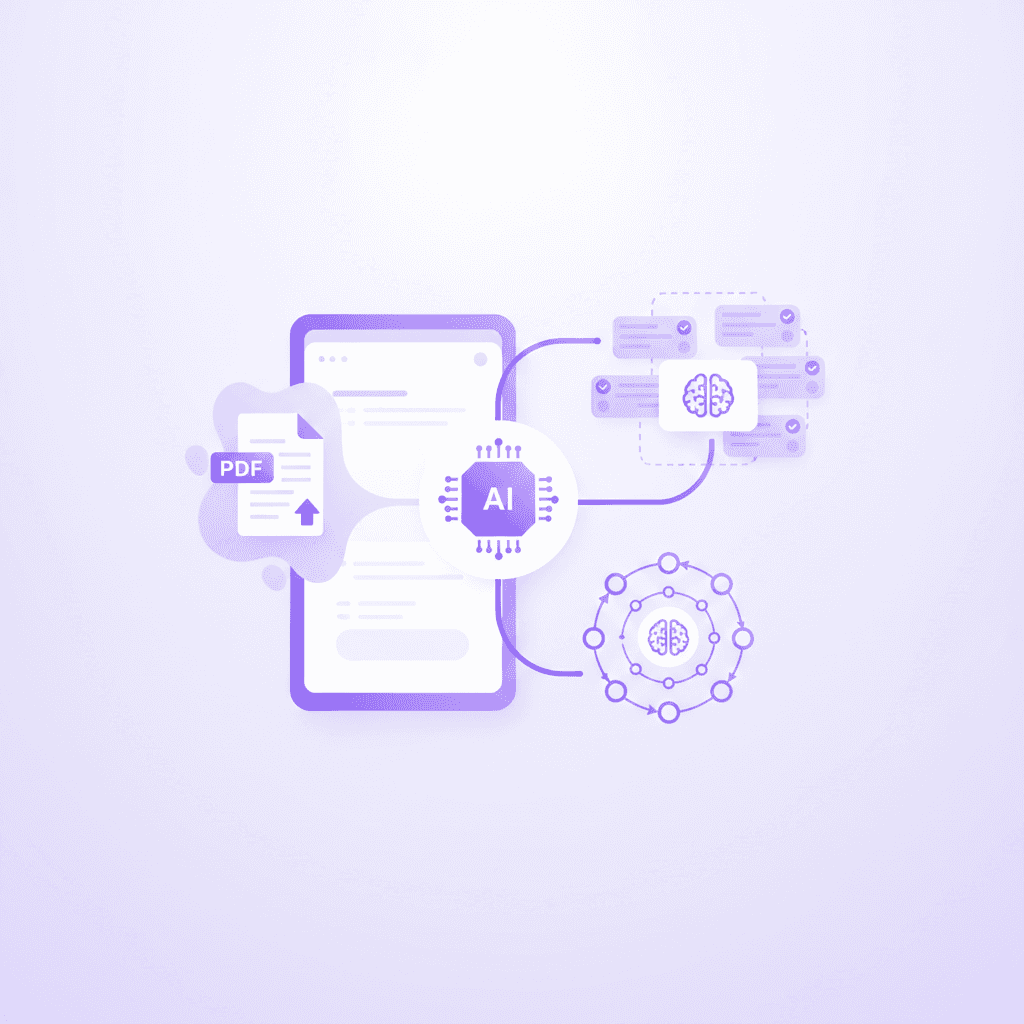
Applying these proven study techniques is effortless with Penseum. Instead of spending hours manually creating materials or relying on inaccurate, crowdsourced Quizlet decks, you simply upload your own PDFs, slides, or notes. Within seconds, Penseum generates personalized flashcards, quizzes, study guides, and mind maps.
For instance, an engineering student struggling with calculus can upload their raw lecture slides directly to the platform. Instead of searching the internet for generic explanations, they immediately receive tailored materials based exactly on their professor's unique curriculum.
Over 1.6 million learners across 130+ countries use Penseum to study smarter, accessing features via a completely free tier with no credit card required. Traditional studying forces you to spend half your time building the materials before you can even begin the active recall process. Penseum automates the busywork so you can spend 100% of your time actually learning.
Feature | Penseum AI Tutor | Generic Chatbots | Traditional Studying |
|---|---|---|---|
Material Generation | Instant guides from your exact notes | Often hallucinates facts | Hours of manual writing |
Active Recall Testing | Automated, targeted flashcards | Requires complex prompting | Manual index cards |
Error Correction | Spots visual mistakes on canvas | Text-only generic answers | Waiting for office hours |
Teaching Style | Live, out loud, step-by-step | Stops after one response | Reading stagnant textbooks |
If you get stuck on a difficult concept, you do not have to wait for your professor's office hours. Your actionable step is to upload your current syllabus or lecture notes to Penseum today to instantly interact with a live 1-1 AI tutor that explains problems out loud, draws diagrams, and corrects your mistakes in real-time.
Unlike generic tools that just hand you the answer, Penseum forces you to work through the problem. It watches your steps on the canvas. If you make a math error, your AI tutor spots it, marks exactly where you went wrong, and explains what to fix. Then it requires you to try again until you actually master the concept.
FAQ Questions to Answer
What is the 100% best way to study?
There is no single magic method, but the scientifically proven best way to study combines active recall and spaced repetition. Passively reading notes is ineffective. Actively testing yourself over gradually increasing intervals ensures information transfers from short-term to long-term memory for exam success.
How many hours a day should a student study?
Most college students should aim for 2 to 3 hours of study time per credit hour each week. However, the quality of study matters more than quantity. Using deep focus methods like the Pomodoro technique can reduce total study hours while increasing actual retention.
Is it better to study at night or in the morning?
It depends on your personal circadian rhythm, but morning studying is generally best for memory recall and complex problem-solving because your brain is rested. Night studying can also be effective for reviewing flashcards right before sleep, which heavily aids memory consolidation.
How can I study when I don't feel like it?
Overcome procrastination by using the 5-minute rule: commit to studying for just five minutes. Once you start, the friction of beginning disappears, and you'll likely keep going. Having an interactive tool like an AI tutor can also make starting less intimidating.
How do I study for a test in one day?
If you only have one day, prioritize practice tests and active recall over reading. Focus entirely on the most heavily weighted topics. Take mock exams to identify weak spots quickly, and use tools that provide immediate, step-by-step explanations to fix mistakes fast.
Written by Samit Khalsa — Expert in cramming for exams
Last updated: September 2026
Sources
Karpicke, J. D., & Roediger, H. L. (2008). The critical importance of retrieval for learning. Science, 319(5865), 966-968. https://pubmed.ncbi.nlm.nih.gov/18276894/
Ariga, A., & Lleras, A. (2011). Brief and rare mental "breaks" keep you focused: Deactivation and reactivation of task goals preempt vigilance decrements. Cognition, 118(3), 439-443. https://pubmed.ncbi.nlm.nih.gov/21211793/
Ebbinghaus, H. (1885). Memory: A Contribution to Experimental Psychology. Annals of Neurosciences, 20(4), 155–156. https://www.ncbi.nlm.nih.gov/pmc/articles/PMC4117135/
Fiorella, L., & Mayer, R. E. (2013). The relative benefits of learning by teaching and teaching expectancy. Contemporary Educational Psychology, 38(4), 281-288. https://scholar.google.com/scholar?q=The+relative+benefits+of+learning+by+teaching+and+teaching+expectancy
Mark, G., Gudith, D., & Klocke, U. (2008). The cost of interrupted work: more speed and stress. Proceedings of the SIGCHI Conference on Human Factors in Computing Systems, 107-110. https://scholar.google.com/scholar?q=The+cost+of+interrupted+work:+more+speed+and+stress
Dunlosky, J., Rawson, K. A., Marsh, E. J., Nathan, M. J., & Willingham, D. T. (2013). Improving Students' Learning With Effective Learning Techniques. Psychological Science in the Public Interest, 14(1), 4-58.
Cepeda, N. J., Vul, E., Rohrer, D., Wixted, J. T., & Pashler, H. (2008). Spacing effects in learning: A temporal ridgeline of optimal retention. Psychological Science, 19(11), 1095-1102.
Ward, A. F., Duke, K., Gneezy, A., & Bos, M. W. (2017). Brain Drain: The Mere Presence of One’s Own Smartphone Reduces Available Cognitive Capacity. Journal of the Association for Consumer Research, 2(2), 140-154.
Roediger, H. L., & Karpicke, J. D. (2006). Test-Enhanced Learning: Taking Memory Tests Improves Long-Term Retention. Psychological Science, 17(3), 249-255.
Related guides
Ready to study smarter?
Start turning your notes into guides, quizzes, and flashcards in seconds.