7 Study Schedule Steps for Better Grades
Building a study schedule requires auditing your time, prioritizing difficult subjects, and spacing out review sessions. Instead of relying on motivation, structured routines build automatic habits that secure higher exam scores. Using time blocks and frequent breaks prevents cognitive fatigue and transforms overwhelming semesters into manageable daily actions.
Key Takeaways:
* Audit fixed commitments to map out true free time.
* Assign specific subjects to distinct calendar blocks.
* Tackle challenging material during peak energy hours.
* Integrate structured intervals to restore attention spans.
* Use AI tools to instantly generate practice materials.
1. How do you assess your time for a study schedule?
A successful study schedule begins with a thorough time audit. Before adding study blocks, map out all fixed commitments like classes, work shifts, and sleep. This creates a realistic visual of your available free time, preventing you from overcommitting and burning out during the demanding academic semester.
A 2021 study in the Journal of Educational Psychology highlights that time management behaviors are highly correlated with academic achievement (Wolters et al., 2021). Students who accurately estimate their available hours consistently outperform peers who study erratically.
Most students fall victim to the planning fallacy. You might look at a week and assume you possess 40 hours of free time. A strict audit usually reveals far less. Every week contains 168 hours. Subtract 56 hours for sleep, 15 hours for lectures, 21 hours for eating, and 10 hours for commuting. The remaining block shrinks rapidly.
To build a plan that survives midterms, track everything you do for three days in a spreadsheet. Identify wasted hours consumed by unstructured scrolling or inefficient transitions between tasks. Subtract all fixed activities to find your true available study windows.
Understanding exactly when you are occupied allows you to claim the empty spaces intentionally. This foundational step is exactly 7 Steps on How to Study for Better Exam Grades starts with situational awareness. You cannot schedule deep work if you do not know when your schedule is truly empty.

2. What is the best way to block study time?
Time blocking is the most effective method for organizing a study schedule. Instead of a vague to-do list, assign specific subjects to exact time slots on your calendar. This dedicated focus minimizes distractions, prevents procrastination, and ensures that every class receives the attention it requires.
Cal Newport's Deep Work principles (2016) show that working in uninterrupted blocks can increase productivity by up to 20 percent compared to fragmented work. Jumping between a task list and your phone drains working memory through context switching.
Task lists cause decision fatigue. Staring at six assignments forces your brain to constantly evaluate what to do next. A blocked calendar removes this friction. The schedule dictates your actions. If the calendar says 9:00 AM is for biology, you open the biology textbook.
Parkinson’s Law dictates that work expands to fill the time allotted for its completion. Giving yourself "all day Sunday" to write an essay guarantees the essay will take all day. Giving yourself a rigid two-hour block forces efficiency.
Schedule your study blocks into a digital calendar, dedicating specific hours to specific classes rather than just writing "study" on your agenda. Color-code your subjects to create visual clarity. Treat these blocks with the same respect you give a paid job or a live lecture. Learning 9 Effective Study Strategies to Boost Grades requires the discipline to honor the boundaries of your calendar.
For the best results, leave 20 percent of your blocks empty. This creates a buffer for assignments that take longer than anticipated. Learning 7 Ways: How to Focus While Studying to Ace Exams means acknowledging that perfect days rarely happen, and buffer blocks prevent a single delay from ruining your entire week.
3. How should you prioritize your hardest subjects?
Your study schedule should position your most challenging subjects during your peak energy hours. Tackling difficult topics first, known as eating the frog, ensures you have the cognitive resources required to understand complex material before mental fatigue sets in later in the day.
A study by the American Psychological Association found that cortisol, the hormone associated with alertness, peaks in the morning for most young adults (Adam et al., 2017). Matching complex academic demands to your biological peaks creates efficient study sessions.
Not all hours hold equal value. Studying organic chemistry at 9:00 AM yields entirely different results than studying it at 11:30 PM. The brain possesses a limited capacity for deep problem-solving each day. As you make decisions, attend lectures, and socialize, your cognitive reserves deplete.
Identify your single most difficult course and schedule its primary study blocks within the first two hours of your typical studying routine. Save easier tasks, like formatting citations or organizing digital files, for the late afternoon or evening.
Organizing subjects by energy demand rather than deadlines protects your GPA. Many students default to studying whatever is due next. This reactionary approach often forces them to write complex essays when they are completely exhausted.
Executing the 8 Best Study Techniques For Higher Grades depends on energy management. Map your circadian rhythm. If you naturally wake up early, front-load your math and science courses. If you operate best after sunset, structure your day so your most demanding blocks land during your evening peak.
4. Why are breaks essential in a study schedule?
Breaks are vital in a study schedule because continuous focus leads to cognitive depletion. Strategic resting periods allow the brain to consolidate information and restore attention spans. Utilizing structured intervals ensures students maintain high retention rates and avoid mental exhaustion during long study sessions.
Ariga and Lleras (2011) discovered that brief diversions and scheduled breaks vastly improve focus on tasks lasting longer than 45 minutes. The brain processes information similar to a muscle lifting weights. Without a recovery period, performance plummets.
The vigilance decrement explains why reading the same textbook page repeatedly yields zero comprehension after two hours. Your brain registers constant stimulation as background noise and tunes it out. A break resets your sensory perception.
Integrate the pomodoro technique into your schedule by setting a timer for 25 minutes of intense focus followed by a 5-minute restorative break. Master the 5 Pomodoro Technique Steps to Study Faster by strictly enforcing the timer.
What you do during a break dictates its effectiveness. Scrolling social media consumes working memory and strains your visual cortex. This is not a real break.
True restorative breaks involve physical movement or stepping away from screens. Stand up, stretch, get a glass of water, or stare out a window to relax your eye muscles. Returning to your study block after physical movement guarantees sharper focus and faster processing speeds.

5. How often should you review older material?
A comprehensive study schedule must include recurring intervals for reviewing older material to combat the forgetting curve. Rather than cramming the night before, schedule brief, consistent review sessions for previous topics alongside new material. This approach moves information from short-term to long-term memory permanently.
Karpicke and Roediger (2008) demonstrated that spaced retrieval practice can boost long-term memory retention to over 80 percent. Without deliberate review, the human brain forgets approximately 70 percent of new information within 24 hours.
Most students design schedules entirely around new chapters. They read chapter one in September and do not look at it again until the December final. This forces them to relearn the entire concept from scratch.
Dedicate 15 minutes at the start of every study block to utilize spaced repetition, reviewing concepts learned one day, one week, and one month prior. This constant low-stakes testing signals to your brain that the information holds permanent value.
Following 5 Spaced Repetition Tips for Better Grades transforms how you encode data. Instead of scheduling a brutal five-hour review session before midterms, you spread that effort across ten weeks.
Integrating 5 Active Recall and Spaced Repetition Tips for Exams directly into your calendar ensures you never fall behind. This is the exact mechanism outlined in 7 Tips on How to Memorize Faster for Exams. Small, frequent touches of older material out-perform rare, massive study sessions every single time.
6. How do you stay consistent with your study schedule?
Consistency with a study schedule relies on habit stacking and environmental cues rather than sheer willpower. By linking study blocks to existing daily habits and utilizing the same physical environment, studying becomes an automatic reflex rather than a daily struggle requiring intense motivation.
Lally et al. (2010) found that it takes an average of 66 days for a new behavior to become automatic, emphasizing the need for environmental consistency. Motivation is an emotion, and emotions fluctuate. Systems and environments remain constant.
Habit stacking ties a new behavior to an established routine. Anchor your first study session of the day to a pre-existing daily habit. If you drink a cup of coffee every morning at 8:00 AM, make sitting at your desk with an open textbook the immediate next step.
Your physical environment dictates your psychological state. Studying in bed confuses your brain, mixing the cues for sleep with the cues for focus. Designating a specific spot entirely for academic work triggers state-dependent learning.
Applying 7 Ways: How To Study Effectively For Better Grades requires removing friction. Keep your desk clear of clutter. Leave your textbook open to the page you need to read tomorrow.
When your study blocks are anchored to daily triggers and specific locations, skipping a session feels unnatural. You stop asking yourself if you feel like studying, and you simply execute the block because it is time to do so.
7. How Penseum Helps You Apply Your Study Schedule
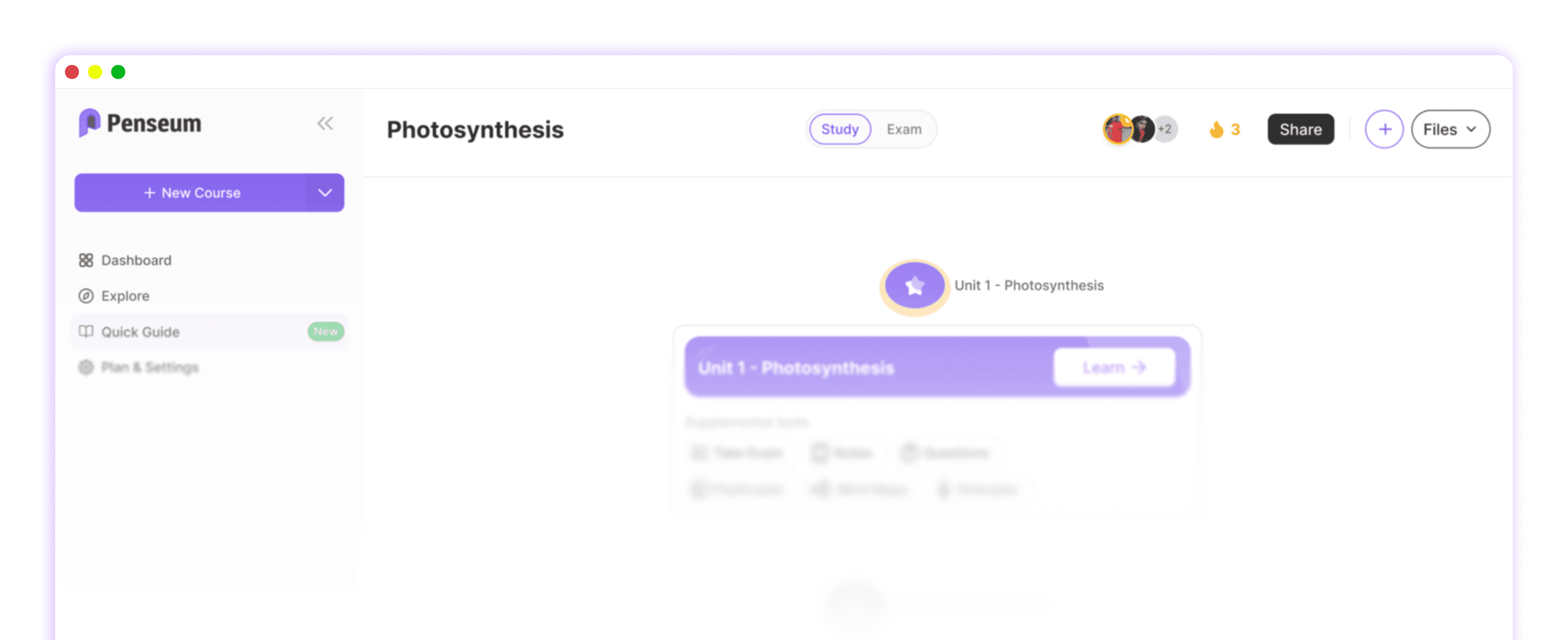
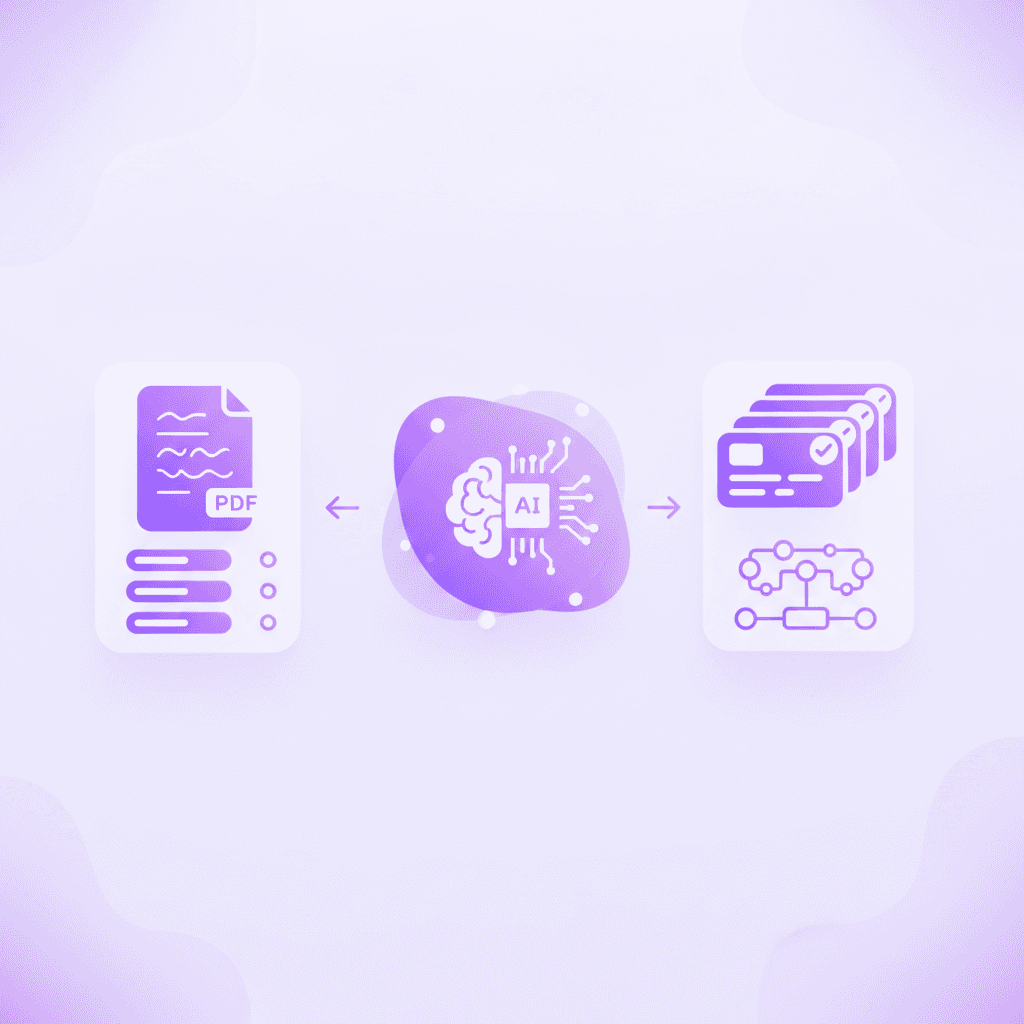
Executing a study schedule is much easier when students do not waste valuable time manually creating study materials. Instead of spending two hours writing flashcards during a scheduled block, students can utilize AI tools to instantly transform lecture notes into interactive practice, reserving scheduled time for actual learning.
Over 1.6 million students across 130+ countries use Penseum to optimize their study sessions, instantly converting notes into quizzes, study guides, and flashcards. When you build a tight, focused calendar, every minute counts. Spending 40 percent of your study block formatting index cards destroys your efficiency.
Penseum operates as your 1-1 AI Tutor. It explains material, generates instant practice tools, and asks you questions to ensure the concepts actually stick.
Feature | Manual Studying | Standard AI Chatbots | Penseum AI Tutor |
|---|---|---|---|
Material Creation | Hours spent writing flashcards | Requires complex prompting | Instant quizzes and guides from uploads |
Feedback Loop | Waiting for professor office hours | Generic text responses | Real-time voice explanations |
Error Correction | Finding out on exam day | Stops after one answer | Spots exact mistakes and draws live diagrams |
Visual Learning | Static textbook images | Blind to user's screen | Sees actual work on canvas and responds |
During your next scheduled study block, upload a PDF or lecture slide to Penseum's free tier and let the 1-1 AI Tutor guide you through step-by-step problem-solving. Susan S., a current user, reports: "Penseum is legit! I don’t have to waste time making flashcards anymore. I just upload my stuff, and it does the rest."
Reading through 7 Steps: How to Study for Exams and Ace Finals reveals the necessity of active practice. Penseum enforces this by waiting for you to show your steps, catching specific mistakes, and keeping you engaged until you get it right.
Applying 7 Steps: How to Study for Finals & Ace Exams requires high-quality review tools. Start turning your notes into guides, quizzes, and flashcards in seconds. Sign up for Penseum today and reclaim your study blocks for actual learning.
Frequently Asked Questions
How many hours a day should a student study?
A general standard is studying two to three hours per week for every credit hour taken. For a standard 15-credit college semester, this equals roughly 30 to 45 hours of studying per week, or about 4 to 6 hours daily. Quality always outweighs quantity. Four hours of highly focused, blocked time produces vastly better academic results than eight hours of distracted reading.
What is a realistic study schedule?
A realistic study schedule accounts for human limits and includes ample buffer time. It caps intense deep work at roughly four to six hours per day. Realistic planning maps out non-negotiable commitments first, integrates mandatory breaks every hour, leaves weekends partially open for recovery, and never assumes a student can focus perfectly for ten consecutive hours.
How do I make a study schedule for final exams?
Begin by backward planning from the exact date of each exam. Divide the course material into specific chapters and assign one chapter to a dedicated block per day. Ensure the plan includes distinct days for reviewing old material and practicing past exam questions. Stop adding new material at least 48 hours before the test to focus entirely on active recall.
Is it better to study at night or in the morning?
Studying in the morning generally aligns better with natural biological rhythms, as cortisol and alertness naturally peak early in the day. Tackling complex subjects before cognitive fatigue sets in improves retention. Night studying works for specific chronotypes, but often falls victim to diminished working memory and exhaustion accumulated throughout the day.
How do you stick to a study schedule?
Sticking to a plan requires treating study blocks as non-negotiable appointments. Design an environment free of friction by keeping textbooks open and removing phones from the room. Use habit stacking to connect study sessions to existing daily triggers. Relying on strict environmental design ensures follow-through even on days when motivation is completely absent.
Written by Samit Khalsa — Expert in cramming for exams
Last updated: September 2026
Sources
Wolters, C. A., Won, S., & Hussain, M. (2021). "Time management behaviors are highly correlated with academic achievement." Journal of Educational Psychology.
Newport, C. (2016). Deep Work: Rules for Focused Success in a Distracted World. Grand Central Publishing.
Adam, E. K., Quinn, M. E., Tavernier, R., McQuillan, M. T., Dahlke, K. A., & Gilbert, K. E. (2017). "Diurnal cortisol slopes and mental and physical health outcomes: A systematic review and meta-analysis." Psychoneuroendocrinology. Available at: https://pubmed.ncbi.nlm.nih.gov/28806606/
Ariga, A., & Lleras, A. (2011). "Brief and rare mental 'breaks' keep you focused: Deactivation and reactivation of task goals preempt vigilance decrement." Cognition. Available at: https://pubmed.ncbi.nlm.nih.gov/21215952/
Karpicke, J. D., & Roediger, H. L. (2008). "The critical importance of retrieval for learning." Science. Available at: https://pubmed.ncbi.nlm.nih.gov/18276859/
Lally, P., van Jaarsveld, C. H. M., Potts, H. W. W., & Wardle, J. (2010). "How are habits formed: Modelling habit formation in the real world." European Journal of Social Psychology. Available at: https://scholar.google.com/scholar?q=How+are+habits+formed:+Modelling+habit+formation+in+the+real+world
Ebbinghaus, H. (1885). Memory: A Contribution to Experimental Psychology. Annals of Neurosciences. Available at: https://pubmed.ncbi.nlm.nih.gov/25206121/
Related guides
Ready to study smarter?
Start turning your notes into guides, quizzes, and flashcards in seconds.