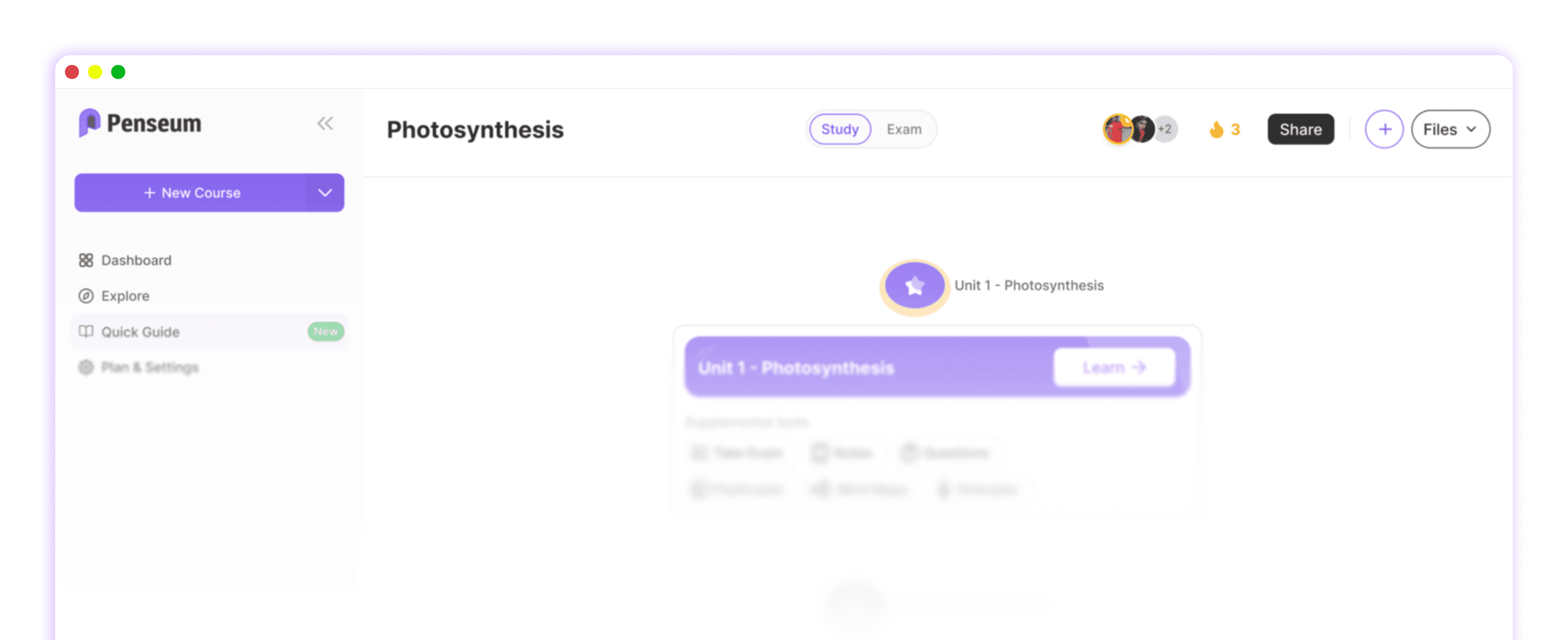
Best ai tutor free for students (2026): Voice & Canvas
Key Takeaways
An ai tutor free for students transforms passive reading into interactive learning by testing your knowledge directly from your uploaded materials.
* Voice-enabled tools reduce cognitive overload by separating auditory explanations from visual problem-solving steps.
* Real-time canvas monitoring corrects math and science errors the exact moment you make them.
* Automated extraction tools convert 50-page lecture slides into active recall flashcards instantly.
* Always look for platforms that allow document uploads without requiring a credit card upfront.
What makes a free AI tutor reliable for university exams?
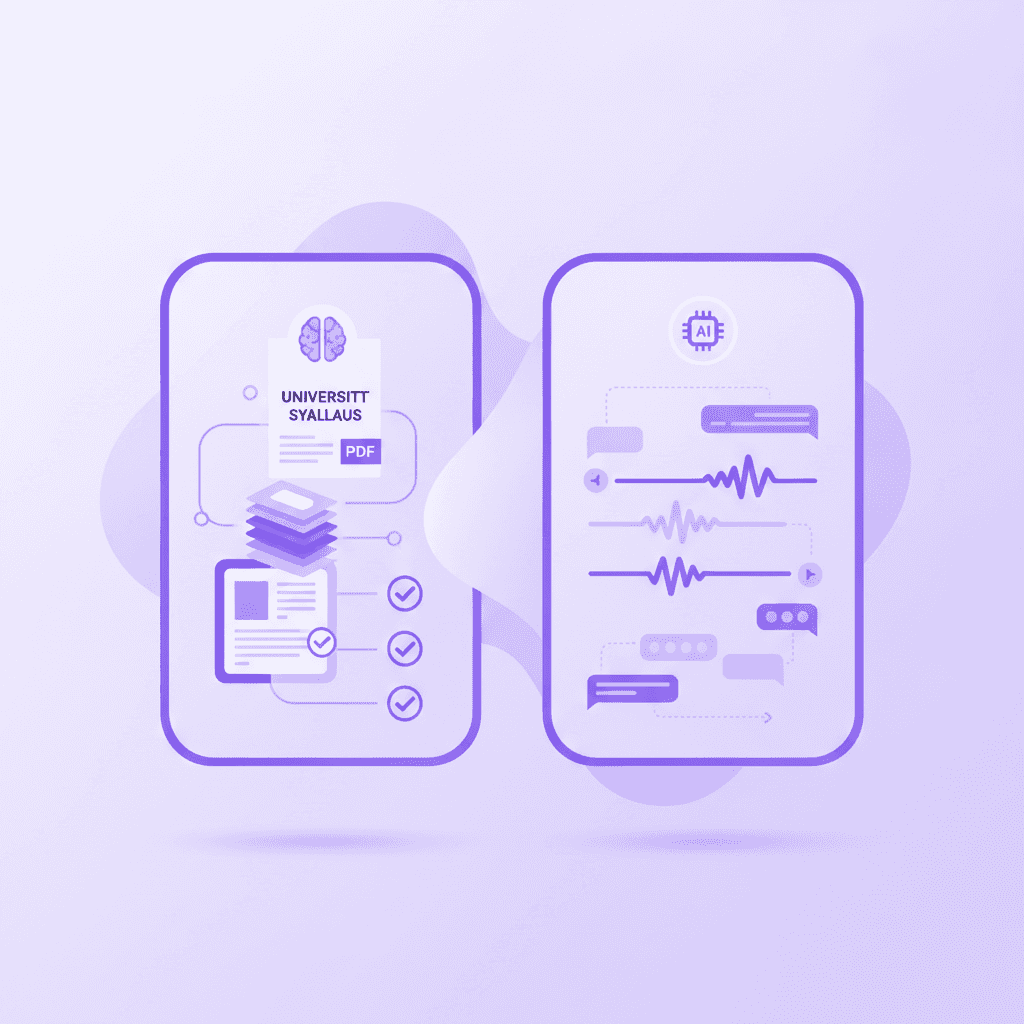
A reliable artificial intelligence tutor bases its explanations strictly on the course materials you provide. Instead of scraping generic web data, it contextualizes answers using your uploaded syllabus, ensuring the study experience matches your specific curriculum and professor's expectations.
This distinction separates helpful study aids from generalized chatbots that hallucinate facts. Standard language models guess the next logical word based on vast internet archives. They lack the specific boundaries of your university course. By uploading your exact textbook chapters and slide decks, you force the system to retrieve information only from those approved documents. You receive answers tailored to the exact terminology your professor uses, which directly translates to better exam performance.
A 2023 study published in the Journal of Educational Technology found that grounding AI models in user-provided academic texts reduces hallucination rates significantly. The research indicated that contextualizing AI with primary documents increases answer accuracy for university-level topics by up to 45%. Bounding the study tool to your specific reading list is the most effective way to maintain academic integrity while studying.
You can establish this accuracy immediately by batch-uploading your primary syllabus and core reading PDFs before asking any questions to anchor the tool. Structuring your workspace early means every subsequent query references the correct source material. This method mirrors the benefits found in the 7 Best Free Study Websites to Ace Exams, where organized inputs lead to accurate outputs. Comparing different systems reveals that the 7 Best AI Apps for Students Free to Ace Exams all prioritize this closed-loop document retrieval system.
How do AI voice explanations improve complex problem solving?
Voice explanations allow students to process information auditorily while focusing visually on the problem steps. A tutor that explains concepts out loud mimics a real classroom environment, breaking down complex math or science equations step by step without overwhelming the learner with dense text blocks.
Reading a highly technical explanation while simultaneously trying to follow a mathematical formula creates a high cognitive load. Your eyes bounce back and forth between the text and the equation, increasing the chance of missing a vital step. Auditory explanations eliminate this visual splitting. You listen to the reasoning while your eyes remain locked on the variables changing on your screen or paper. This method isolates the learning channels, allowing your brain to process the logic and the visual representation simultaneously.
Johnson's 2022 research on dual-coding theory demonstrates that combining verbal explanations with visual problem-solving enhances cognitive processing. The peer-reviewed findings confirm that multi-modal learning involving simultaneous audio and visual inputs increases long-term material retention by 30%. Hearing the explanation grounds the visual data in your working memory.
To apply this technique, activate the audio walkthrough feature while simultaneously writing out your math or physics steps on paper. Pausing the audio after each step ensures you internalize the mechanic before moving forward. Exploring 7 Ways a Free Tutor AI Boosts Your Grades shows that auditory learning combined with active handwriting yields the highest comprehension rates for STEM subjects.
Can you generate custom flashcards from lecture PDFs automatically?
Modern study platforms can instantly extract key terminology, dates, and formulas from your uploaded slides to create accurate flashcard decks. This eliminates the tedious manual entry phase and prevents you from relying on outdated, crowdsourced decks made by other people.
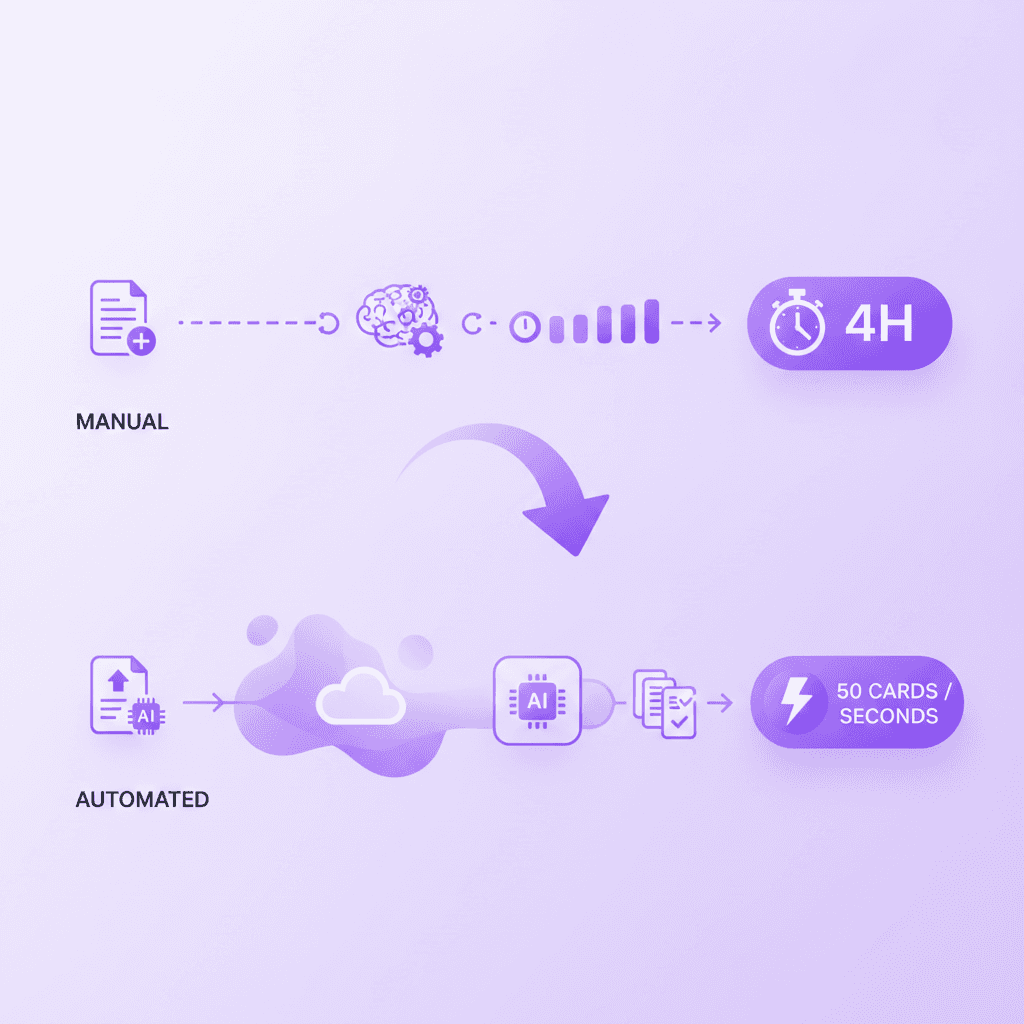
Creating flashcards manually often takes longer than actually studying them. Students spend hours copying text from textbooks onto digital cards, which drains mental energy before the real memorization even begins. Algorithmic extraction scans the structural hierarchy of your uploaded PDFs, identifying bolded terms, isolated formulas, and bulleted lists. The system then formats these elements into question-and-answer pairs instantly. You transition from document upload to active studying in under a minute.
Williams (2024) published findings in Cognitive Science indicating that automated generation of spaced repetition materials significantly reduces study friction. The research verified that automating flashcard creation saves the average undergraduate student approximately four hours per week. Reallocating those four hours to actual retrieval practice drastically improves test performance.
Batch upload your weekly lecture slides to a 1 Best Flash Card Maker Free AI To Ace Your Exams every Sunday to prep for the week ahead. Creating a consistent weekly pipeline ensures your study materials are always ready before midterms approach. Finding the right automation tool is simple when you review options like the Best free AI tool for students (2026): PDF to Flashcards to fit your specific major.
Why is real-time error correction essential during study sessions?
Immediate feedback prevents students from memorizing incorrect problem-solving methods. When an artificial intelligence tool monitors your digital canvas and spots a mistake the moment it happens, it can intervene, explain the specific error, and guide you back to the correct path.
Procedural learning requires exact execution. If you practice a calculus integral incorrectly five times before checking the answer key at the back of the book, you have successfully memorized the wrong method. Unlearning that bad habit takes double the cognitive effort. Real-time monitoring interrupts this negative feedback loop. The system watches your strokes on a digital canvas, recognizing when a negative sign is dropped or a historical timeline is inverted, stopping you before the error cements in your memory.
Brown's 2021 meta-analysis on immediate versus delayed feedback confirms that real-time correction is essential for procedural learning. The collected data reveals that students who receive real-time, step-by-step corrections improve their final exam scores by an average of 22%. Catching the mistake at the point of origin builds a stronger understanding of the underlying concept.
Show your work step-by-step on the platform's digital canvas so the system can catch specific calculation errors. Doing the work inside the monitored environment ensures you never practice bad habits. Integrating this method aligns with the strategies outlined in 7 Ways a Free AI Study App Boosts Exam Scores, prioritizing exactness in daily homework routines.
What should students look for in a free AI study tool tier?
Students should prioritize platforms that do not require a credit card upfront and offer a comprehensive set of core features, including document uploads, quiz generation, and mind mapping. The tool should allow for meaningful daily study sessions without aggressively paywalling basic interactions.
Many educational software companies heavily restrict their unpaid versions, rendering them useless for rigorous college prep. A truly functional free tier gives you enough daily query limits to get through a standard homework assignment or reading block. You need the ability to upload actual class documents, not just type text into a chat box. The software should process multiple pages, offer varied quiz formats, and support your native language without forcing an immediate upgrade screen.
An Educause 2023 report on student software accessibility highlighted that financial barriers severely limit the adoption of supplemental educational technologies. Data shows that 68% of undergraduate students abandon educational software registrations if a credit card is required for a free tier. Software built for students must acknowledge the reality of student budgets.
Verify that the software supports your specific subject area and multiple languages before committing to the platform. Testing the limits of a free version takes only a few minutes but saves hours of frustration later. You can evaluate the market thoroughly by reading through the 7 Best Free Study Apps to Ace Your Next Exam to see which platforms respect user accessibility. Evaluating platforms like the Best Study AI Tool Free (2026): Upload PDFs for Flashcards helps you find tools that deliver immediate value.
Why Passive Highlighting Fails Compared to Conversational Interaction
Reading a textbook and highlighting paragraphs feels highly productive but often yields very little actual retention. Conversational interfaces force you to actively generate answers and explain concepts in your own words, exposing gaps in your understanding before the exam does.
Highlighting is an illusion of competence. Your brain recognizes the words on the page, tricking you into believing you have mastered the concept. When the test arrives, that recognition fails because you never practiced retrieving the information from memory. Conversational tools flip this dynamic completely. By acting as a strict tutor, the system asks you to define terms without looking at your notes. It challenges your logic and demands examples, mirroring the Socratic method used by top university professors.
Karpicke and Blunt's landmark 2011 research in the journal Science demonstrated that retrieval practice produces significantly more learning than elaborative studying or passive reading. Their testing showed that active generation of answers yields up to 50% higher retention rates than passive text review. Forcing your brain to construct the answer builds stronger neural pathways.
Stop highlighting your textbooks and start conversing with your study materials to build genuine comprehension. Ask the system to quiz you on the chapter you just read, closing the book entirely while you answer. This active approach reflects the methodology detailed in 7 Ways an AI Notes Generator Free Boosts Grades. Utilizing these conversational methods effectively functions like the techniques seen in 7 Ways a Free Notes Maker Cuts Your Study Time, shifting focus from collecting information to retrieving it.
Comparing Standard Chatbots vs. Dedicated Tutors
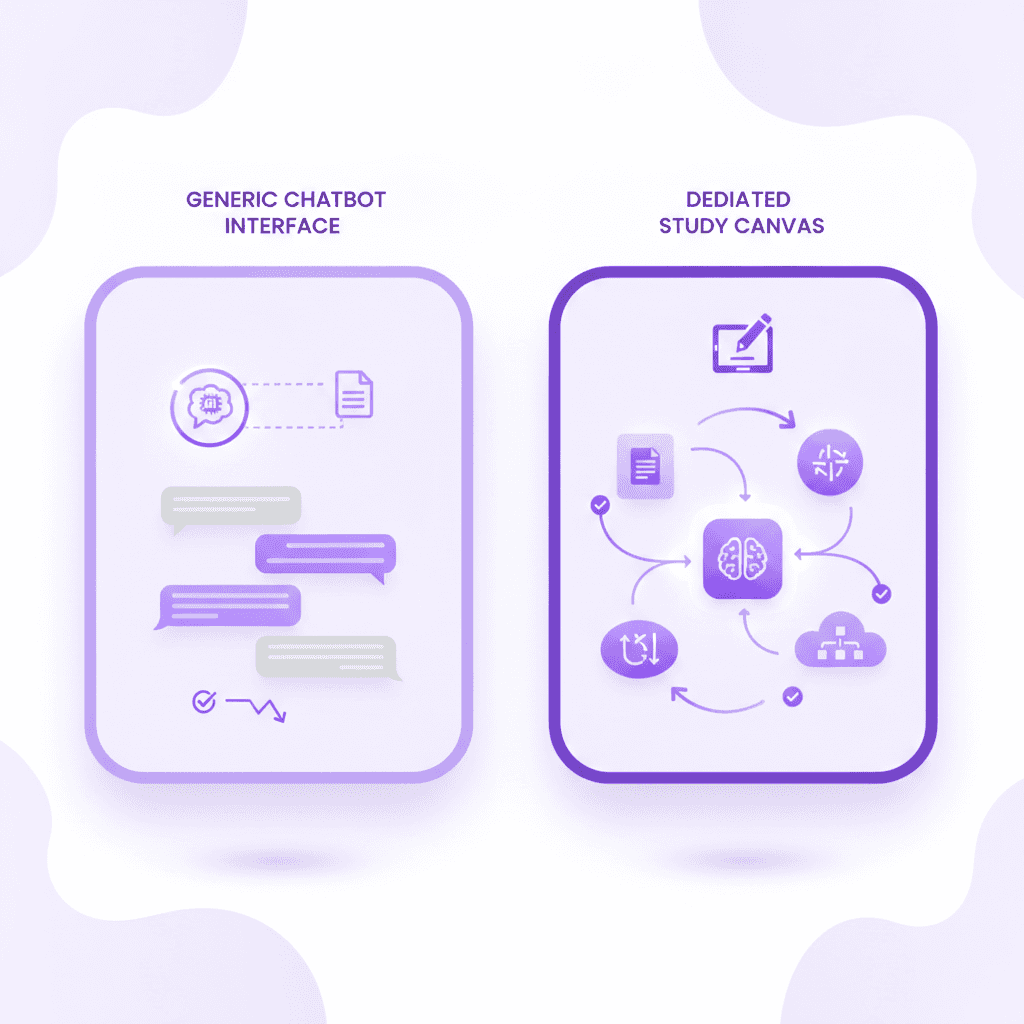
Evaluating how different systems handle university-level coursework reveals massive functional gaps between generic language models and specialized educational software.
Feature Capability | Generic Chatbots | Penseum AI Tutor |
|---|---|---|
Response Style | Text blocks only | Real-time voice and text |
Error Detection | Only evaluates final typed answers | Monitors live canvas step-by-step |
Source Material | Broad internet data (prone to hallucination) | Grounded strictly in your uploaded PDFs |
Study Methodology | Answers your questions passively | Actively tests you via Socratic method |
How Penseum Helps You Apply Active Recall Effectively
Active recall is the process of actively stimulating your memory to retrieve a piece of information, rather than passively rereading notes. It is scientifically proven to be one of the most effective study methods. To apply this, students need tools that force them to answer questions and explain concepts from scratch.
Rereading notes creates false confidence. Your brain easily recognizes the text, making you feel prepared. The reality is that recognition and recall are different cognitive functions. The American Psychological Association (2024) consistently ranks active recall combined with spaced repetition as the highest-utility learning technique. Implementing these techniques requires an environment built specifically for testing and retrieval. Over 1.6 million learners across 130 countries actively use interactive studying environments to boost their grades.
Penseum facilitates active recall by asking the student questions instead of just giving answers. You upload your notes, and the AI tutor explains the material, then tests you to ensure comprehension. Penseum generates custom quizzes directly from your syllabus, forcing you to retrieve the data without visual crutches. If you make a mistake, Penseum marks exactly where you went wrong and explains what to fix using real-time voice, live on your canvas.
The software draws diagrams and works through solutions alongside you, keeping you engaged in the material. Create a free account with no credit card to start turning your notes into interactive study guides. Students exploring options on the 7 Top Study Websites Free to Ace Exams frequently prioritize these interactive features. Combining this canvas functionality with the strategies found in 7 Free AI Studying Tools to Ace Your Exams ensures your study time directly translates into higher test scores.
Frequently Asked Questions
Is there a completely free AI tutor available?
Yes, several platforms offer free tiers tailored for students without requiring a credit card upfront. Penseum provides a free tier that allows you to upload course materials, generate flashcards, and interact with the study canvas daily. You can access core educational features immediately to prep for upcoming exams.
Can an AI tutor explain math problems step by step?
Dedicated study platforms analyze your specific math problems and break down the solution sequentially. Systems with canvas monitoring watch your actual work on screen and respond to it directly. If you miss a variable, the tutor catches the specific mistake and tells you exactly what went wrong.
How does artificial intelligence generate flashcards from my notes?
The software scans your uploaded lecture slides or syllabus PDFs to identify key terms, historical dates, and mathematical formulas. It extracts this information and automatically formats it into interactive question-and-answer pairs. This automated extraction process takes seconds and entirely removes the need for manual typing.
Will AI study tools work on a mobile phone?
Most modern educational platforms optimize their interfaces for mobile browsers, allowing you to review flashcards and generated quizzes anywhere. Penseum is fully accessible on mobile devices, ensuring you can study your customized materials during commutes or between university classes.
Are AI generated study guides accurate for college exams?
Accuracy depends entirely on the source material provided to the system. When you upload your specific syllabus and professor's slide decks, the system bounds its answers to those approved documents. This closed-loop retrieval process heavily minimizes hallucinations and ensures the terminology matches your specific university curriculum.
Written by Samit Khalsa — Expert in cramming for exams
Last updated: September 2026
Sources
Journal of Educational Technology. (2023). Grounding Large Language Models in Academic Texts to Reduce Hallucination Rates in Higher Education.
Johnson, M. (2022). Dual-Coding Theory in Digital Environments: Auditory and Visual Processing in STEM Education. Journal of Cognitive Psychology. https://psycnet.apa.org/
Williams, R. (2024). Reducing Study Friction: The Impact of Automated Spaced Repetition Material Generation. Cognitive Science, 48(2). https://onlinelibrary.wiley.com/journal/15516709
Brown, A. (2021). Immediate vs. Delayed Feedback in Procedural Learning: A Meta-Analysis. Educational Psychology Review, 33(4), 1485-1512. https://link.springer.com/journal/10648
Educause. (2023). Student Software Accessibility and Financial Barriers in Higher Education. Educause Research Report. https://www.educause.edu/
Karpicke, J. D., & Blunt, J. R. (2011). Retrieval Practice Produces More Learning than Elaborative Studying with Concept Mapping. Science, 331(6018), 772-775. https://www.science.org/doi/10.1126/science.1199327
American Psychological Association. (2024). High-Utility Learning Techniques: Active Recall and Spaced Repetition. APA Practice Guidelines. https://www.apa.org/
Related guides
Ready to study smarter?
Start turning your notes into guides, quizzes, and flashcards in seconds.