3 Secret Study Tips to Ace Your Exams
Key Takeaways
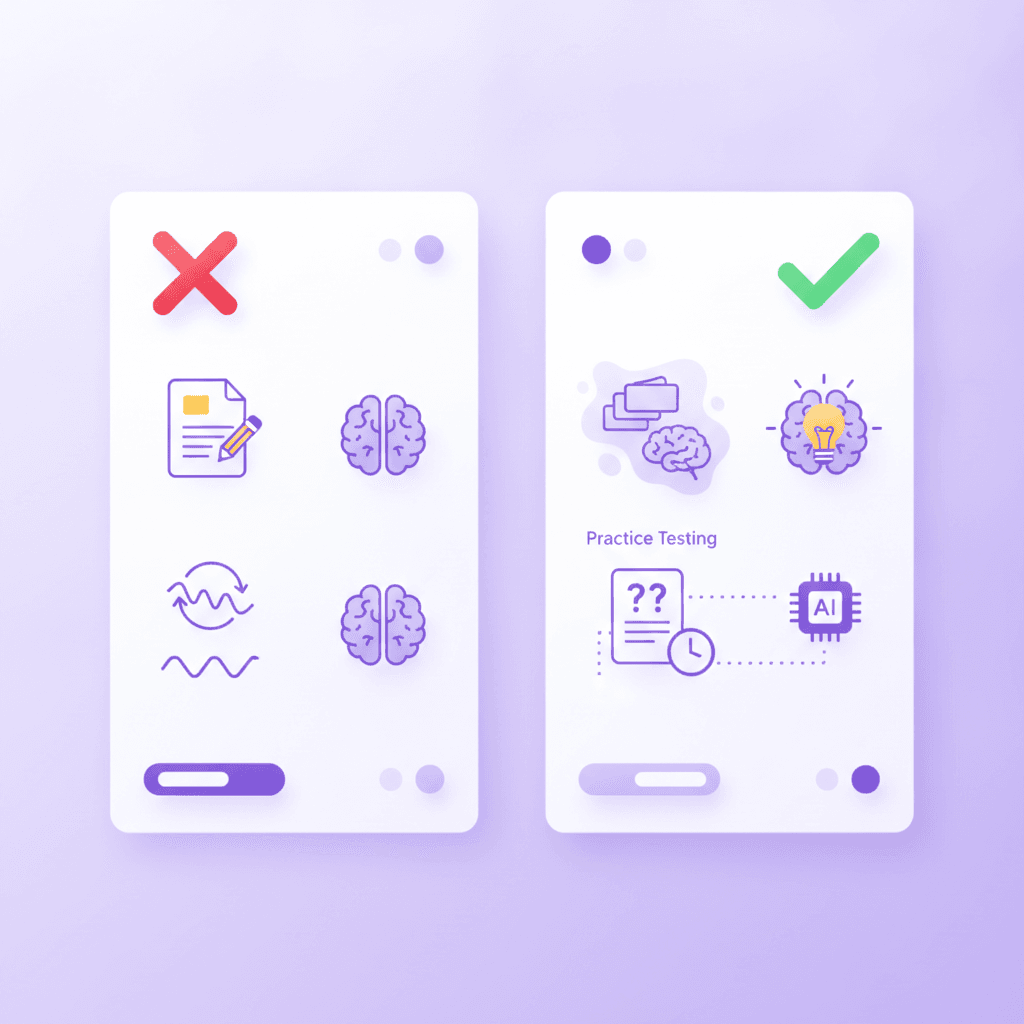
* Active recall forces your brain to retrieve information, significantly strengthening neural pathways for exam day.
* Spaced repetition interrupts the forgetting curve, shifting concepts from short-term memory to long-term storage.
* Interleaving distinct subjects during study sessions trains you to quickly identify problem-solving strategies.
* Combining these 3 secret study tips with a structured Pomodoro schedule reduces exam anxiety and cuts total study time.
What is the first of the 3 secret study tips?
The first secret is active recall, which involves testing yourself on material rather than passively rereading notes. This cognitive effort forces your brain to retrieve information, strengthening neural pathways and making you significantly more likely to remember the concepts during your actual exam without extra effort.
Active recall operates on the principle of retrieval practice. When you read a textbook chapter, your brain temporarily stores the information. Unless you actively force your brain to pull that information back out, those synaptic connections quickly fade. Karpicke & Roediger (2008) documented the critical importance of retrieval for learning in a landmark study. Their findings revealed a staggering performance gap: students using active recall retained 80% of the material compared to just 34% for those who only restudied the text.
Many high school and college students avoid active recall because it feels difficult. Experiencing mental strain during study sessions is an indicator that deep learning is actually occurring. When a concept feels tough to remember, the act of struggling to retrieve it signals your brain to label that information as highly important.
To implement this technique today, close your textbook and write down everything you remember on a blank sheet of paper, then check your notes to fill in any gaps. You can execute this method by drawing mind maps from memory or explaining complex concepts out loud to an empty room. To optimize this process, integrate 5 Active Recall and Spaced Repetition Tips for Exams into your nightly homework routine. The goal is to consistently generate answers from your own mind before verifying them against external sources. For a complete blueprint on exam preparation, follow these 7 Steps on How to Study for Better Exam Grades.

How does the second secret study tip improve memory?
The second secret is spaced repetition, a method where you review information at gradually increasing intervals. Instead of cramming overnight, spacing out your study sessions interrupts the forgetting curve, ensuring the material transfers from short-term to long-term memory with substantially less total study time.
The science behind spaced repetition originates from Hermann Ebbinghaus’s research on the forgetting curve, which illustrates how rapidly the human brain discards newly acquired information. Without intervention, you will forget over 70% of a new lecture within 24 hours. Cepeda et al. (2008) conducted extensive research on optimal review gaps and the Ebbinghaus Forgetting Curve. Their research showed that spacing improves long-term retention by up to 200% compared to massed practice or cramming.
Cramming creates a dangerous illusion. Reviewing flashcards for eight hours straight before finals might allow you to pass the test the next morning, but that knowledge evaporates within days. Spaced repetition forces you to retrieve information right at the exact moment you are about to forget it. This timing signals your brain to reinforce the memory trace permanently.
Create a study schedule that prompts you to review new lecture material after 1 day, 3 days, 1 week, and 2 weeks. You can track these intervals using physical flashcards in a Leitner box system or rely on digital tools with built-in spacing algorithms. Mastering this schedule is one of the best 5 Spaced Repetition Tips for Better Grades available to modern students. As you expand the intervals between review sessions, you naturally reduce the total hours spent studying. For a deeper dive into memory enhancement, explore these 7 Tips on How to Memorize Faster for Exams.
What is the third secret study tip for exam prep?
The third secret is interleaving, which means mixing different subjects or topics in a single study session rather than focusing on just one. This technique trains your brain to quickly identify which strategy to use for different problems, greatly boosting problem-solving speed and accuracy.
Most students naturally default to blocked practice. They study biology for three hours on Monday, history for three hours on Tuesday, and chemistry for three hours on Wednesday. Blocked practice feels productive because you gain intense familiarity with a single concept during that block. This creates false confidence. On an actual exam, problems arrive in a randomized order. Interleaving mimics the unpredictable nature of an exam environment.
Rohrer and Taylor (2007) investigated the shuffling of mathematics problems to measure its impact on student performance. Their experiment revealed that interleaved practice resulted in a 76% higher score on final tests compared to blocked practice. When you mix different topics together, your brain works harder to constantly shift gears. You are learning the solutions while simultaneously learning how to identify the problem type itself.
Swap between three different subjects or distinct concepts every 30 to 45 minutes during your study block to force your brain to adapt. If you are reviewing mathematics, mix geometry, algebra, and calculus questions in the same problem set. Your initial accuracy might drop during these interleaved sessions. Do not panic. The temporary dip in immediate performance translates to massive gains on test day. Structuring your sessions this way ranks among the 8 Best Study Techniques For Higher Grades. You can view similar advanced methods in this list of 9 Effective Study Strategies to Boost Grades.
Why is passive reading ruining your study schedule?
Passive reading tricks your brain into the illusion of competence, where recognizing a text makes you falsely believe you understand it. Simply highlighting or rereading notes yields an incredibly low retention rate after a few days, making it one of the least effective ways to prepare for high-stakes exams.
The visual act of dragging a bright highlighter across a page releases a small burst of dopamine. It feels exactly like doing real work. When you reread that highlighted text later, the words look incredibly familiar. Your brain confuses this simple fluency with actual mastery of the subject matter. Being able to recognize a fact on a page does not mean you can independently recall it on a blank exam sheet.
Dunlosky et al. (2013) published a comprehensive psychological review evaluating the utility of various learning techniques used by students. They discovered that highlighting and rereading show incredibly low utility, leading to an 85% drop in retention over two weeks compared to testing-based methods. Despite these stark numbers, passive review remains the default study method for the vast majority of high school and college students.
Stop highlighting textbooks immediately. Instead, turn every heading into a question and answer it out loud before moving to the next section. Treat your textbook as an answer key rather than a primary reading source. Try generating your own summaries without looking at the source text. Implementing this shift requires discipline but acts as one of the 7 Ways: How To Study Effectively For Better Grades.
How can a Pomodoro technique enhance these study strategies?
Combining these secret study tips with the Pomodoro technique maximizes focus while preventing cognitive fatigue. Working in short, focused bursts separated by brief breaks keeps your dopamine levels stable and increases overall study stamina, allowing you to study longer without feeling burnt out.
The human brain can only maintain peak concentration for limited durations before focus inevitably decays. Attempting to study for four hours straight without breaks leads to diminishing returns, where the final two hours yield almost zero retention. The Pomodoro technique segments your workload into manageable intervals, traditionally 25 minutes of intense work followed by a 5-minute break.
Ariga & Lleras (2011) researched the psychology of sustained attention and brief diversions. Their data indicated that taking brief mental breaks reduces error rates by 30% during prolonged cognitive tasks. Stepping away from your desk resets your attention span. These calculated interruptions prevent the habituation effect, where your brain starts ignoring a constant stimulus like a difficult textbook.
Set a timer for 25 minutes of interleaved active recall, then step completely away from your desk for a 5-minute break. During this break, avoid looking at your phone or scrolling through social media. Walk around your room, stretch, or get a glass of water. After completing four cycles, take a longer 20-minute break. Following these 5 Pomodoro Technique Steps to Study Faster protects your mental energy reserves. Pair this timer system with these 7 Ways: How to Focus While Studying to Ace Exams to eliminate all external distractions.
How do you build a daily routine using these techniques?
Building a daily routine requires scheduling specific blocks for active retrieval, interleaved practice, and spaced reviews. By dedicating just one hour a day to this highly structured approach, students cover far more material than they would through unstructured cramming, drastically reducing pre-exam anxiety.
Success requires shifting from vague intentions to concrete plans. Telling yourself you will study later usually results in procrastination. Implementation intentions require you to define exactly when, where, and how you will execute your 3 secret study tips. Clear (2018) highlighted the power of habit stacking and implementation intentions in building productive routines. Research featured in his work notes that students with scheduled study habits report 50% lower stress levels during finals week.
Audit your current syllabus and map out a weekly calendar that designates specific retrieval practice blocks for each of your classes. A strong schedule eliminates decision fatigue. When you sit down at your desk, you should never have to wonder what subject to tackle first. Review these 7 Study Schedule Steps for Better Grades to set up a sustainable framework.
Day | 25-Min Block 1 (Subject A) | 25-Min Block 2 (Subject B) | 25-Min Block 3 (Subject C) |
|---|---|---|---|
Monday | Biology (Active Recall) | History (Spaced Review) | Math (Practice Problems) |
Tuesday | Math (Interleaved Sets) | Biology (Spaced Review) | English (Essay Outline) |
Wednesday | History (Active Recall) | English (Spaced Review) | Biology (Practice Test) |
Thursday | English (Active Recall) | Math (Spaced Review) | History (Practice Test) |
Treat these study blocks like unchangeable doctor appointments. Apply these 7 Steps: How to Study for Exams and Ace Finals to finalize your daily calendar. Getting your foundation right early in the semester is one of the 7 Secrets to the Best Way to Study for Exams. You can refine this master schedule further by reading through these 7 Steps: How to Study for Finals & Ace Exams.
How Penseum Helps You Apply These 3 Secret Study Tips
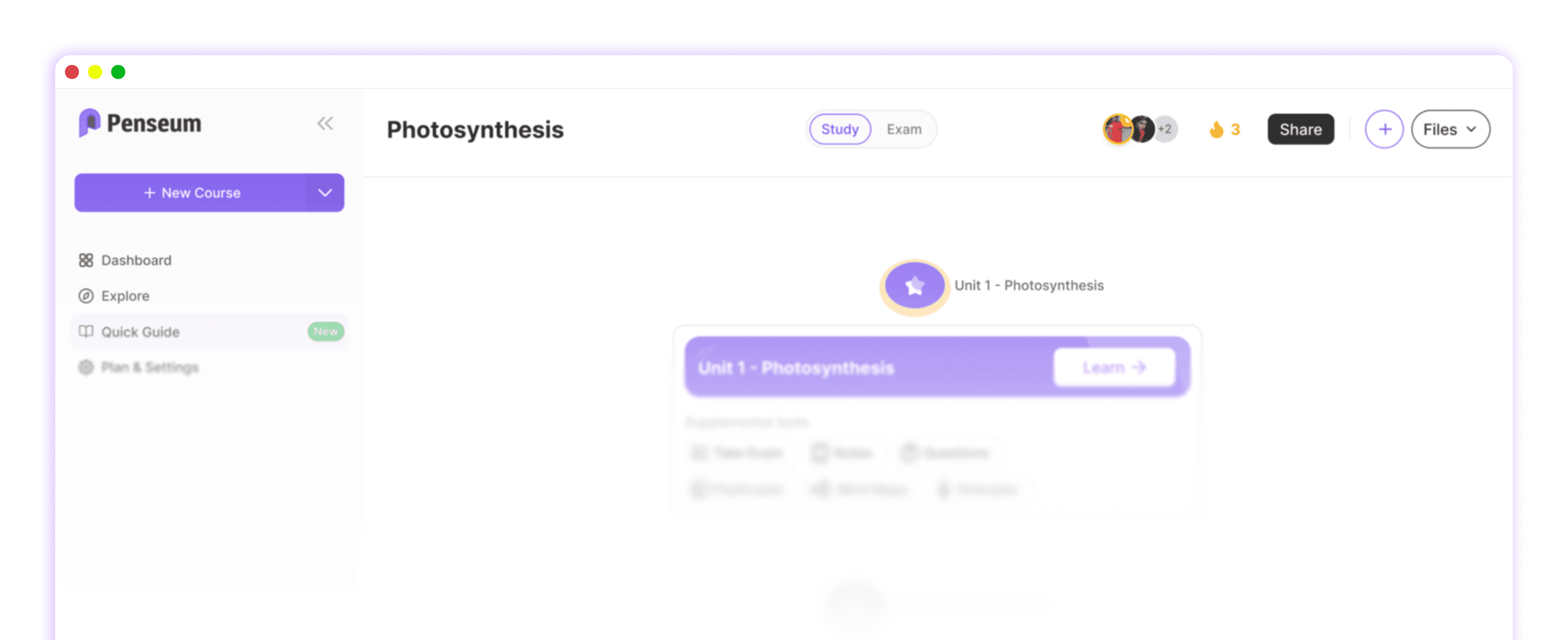
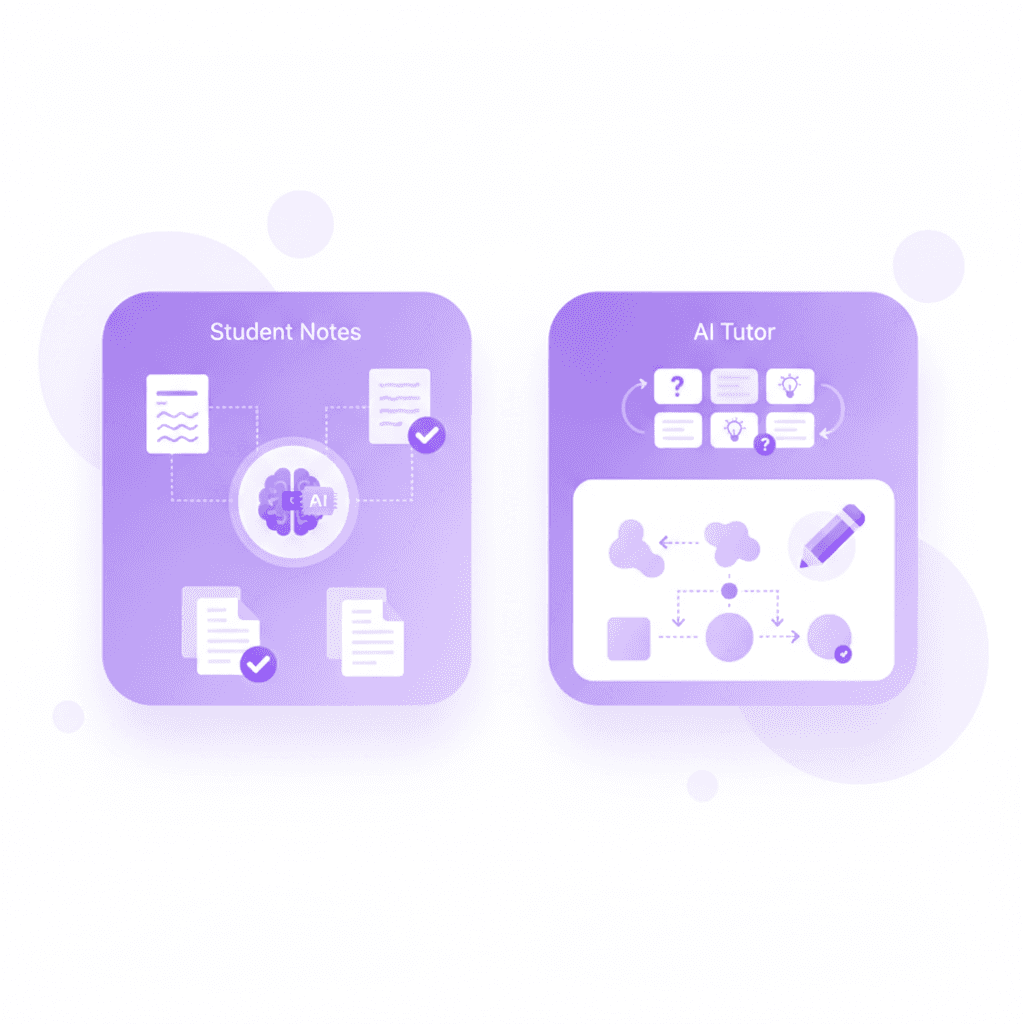
Penseum acts as your 1-1 AI tutor, automating active recall and spaced repetition so you focus entirely on learning. By uploading your own notes or slides, Penseum instantly generates customized flashcards, quizzes, and study guides. The interactive voice tutor draws on a canvas and catches mistakes in real-time.
Generating study materials manually consumes hours of valuable time that you should spend actually learning the material. Creating flashcards from a 50-page lecture slide deck often takes longer than the studying itself. Internal Penseum Data (2024) reveals that Penseum is used by over 1.6 million students across 130+ countries to cut exam preparation time by eliminating the busywork of creating study materials.
Traditional AI chatbots deliver basic text responses and wait for your next prompt. They have no visibility into your problem-solving process. Penseum functions differently by bringing a live tutor directly into your corner. The AI tutor explains problems in real-time voice, step-by-step, out loud. It sees your actual work on the digital canvas. If you make a mathematical error on step three of an equation, Penseum catches your specific mistake, marks exactly where you went wrong, and explains how to fix it.
You control the pace of learning. The platform tests you to enforce active recall and keeps teaching until the concept actually clicks. Create a free Penseum account with no credit card required, upload your latest lecture PDF, and let the AI generate a personalized quiz to instantly test your knowledge.
Frequently Asked Questions
What are the 3 secret study tips for getting straight A's?
The three secret study tips include active recall, spaced repetition, and interleaving. Active recall forces you to retrieve facts from memory. Spaced repetition spreads out review sessions to beat the forgetting curve. Interleaving mixes different subjects together in one session to improve critical problem-solving skills.
How can I study effectively for exams in less time?
You can study more efficiently by entirely abandoning passive reading and highlighting. Shift all your study hours into retrieval practice. Testing yourself immediately highlights what you do not know, allowing you to target your weak spots and skip over the concepts you have already mastered.
Is there an AI tool that makes flashcards from my notes?
Yes, Penseum allows you to upload lecture slides, PDFs, or typed notes and instantly generates interactive flashcards. It automates the entire creation process so you can start testing your memory immediately rather than wasting hours formatting index cards by hand.
What is the best way to study for college finals?
The best approach involves creating a study schedule weeks in advance using spaced repetition. Break your syllabus down into daily 25-minute Pomodoro sessions. Focus heavily on practice tests and randomized problem sets to prepare your brain for the unpredictable format of a final exam.
How does the Pomodoro technique improve study sessions?
The Pomodoro technique forces you to study in 25-minute intervals separated by 5-minute breaks. This structure prevents cognitive fatigue and maintains high focus levels. Taking required breaks gives your brain time to subconsciously process difficult information while stopping you from burning out before the exam.
Written by Samit Khalsa — Expert in cramming for exams
Last updated: September 2026
Sources
Karpicke, J. D., & Roediger, H. L. (2008). The critical importance of retrieval for learning. Science, 319(5865), 966-968. https://pubmed.ncbi.nlm.nih.gov/18276894/
Cepeda, N. J., Vul, E., Rohrer, D., Wixted, J. T., & Pashler, H. (2008). Spacing effects in learning: A temporal ridgeline of optimal retention. Psychological Science, 19(11), 1095-1102. https://pubmed.ncbi.nlm.nih.gov/19076480/
Rohrer, D., & Taylor, K. (2007). The shuffling of mathematics problems improves learning. Instructional Science, 35(6), 481-498. https://scholar.google.com/scholar?q=The+shuffling+of+mathematics+problems+improves+learning
Dunlosky, J., Rawson, K. A., Marsh, E. J., Nathan, M. J., & Willingham, D. T. (2013). Improving Students' Learning With Effective Learning Techniques. Psychological Science in the Public Interest, 14(1), 4-58. https://pubmed.ncbi.nlm.nih.gov/26173288/
Ariga, A., & Lleras, A. (2011). Brief and rare mental "breaks" keep you focused: Deactivation and reactivation of task goals preempt vigilance decrements. Cognition, 118(3), 439-443. https://pubmed.ncbi.nlm.nih.gov/21211793/
Clear, J. (2018). Atomic Habits: An Easy & Proven Way to Build Good Habits & Break Bad Ones. Avery. https://scholar.google.com/scholar?q=Atomic+Habits+Clear+2018+implementation+intentions
Related guides
Ready to study smarter?
Start turning your notes into guides, quizzes, and flashcards in seconds.